


Hey Doc,
Apple put the word longevity on a billion phones this week. Health Age, a Quest panel ordered from the app, coaching, the whole loop. Many of you have been running that loop by hand for years. This issue is about what changes now that the patient side is a consumer product, and how to build the doctor side from your own phone, in four levels.
Also inside: an AI-designed drug that moved six aging clocks in an IPF trial, why two questions about a patient’s parents beat a polygenic score, and caloric restriction data showing half the benefit is not the weight. Plus a poll. Tell me what you want more of.
As always, Happy Sunday.
Dr. David Luu, Founder, longevitydocs.™

How to run a longevity clinic from your phone
Apple put the word Longevity in the Health app.
iOS 27 ships tomorrow. A Longevity tab, a Health Age built from VO2 max, resting heart rate, HRV, sleep and blood work, and a Quest panel of 50+ biomarkers ordered inside the app for $119. Daily data, habits, monitoring, coaching, labs. The whole loop, in a pocket.
I am thinking out loud here. If Apple can hand a patient blood work from the phone, what comes next? Can you run a full virtual clinic from a phone? On the patient side, probably yes. Add a pharmacy and a consultation and Apple becomes the largest healthcare system in the world. Not a hospital. A phone.
Apple’s own footnote says the Health app is for wellness, not medical use. Read that carefully. The doctor is the part they left out. On purpose.
That is where I see the real opportunity. Not Apple running a clinic. Each doctor running a practice from a phone.
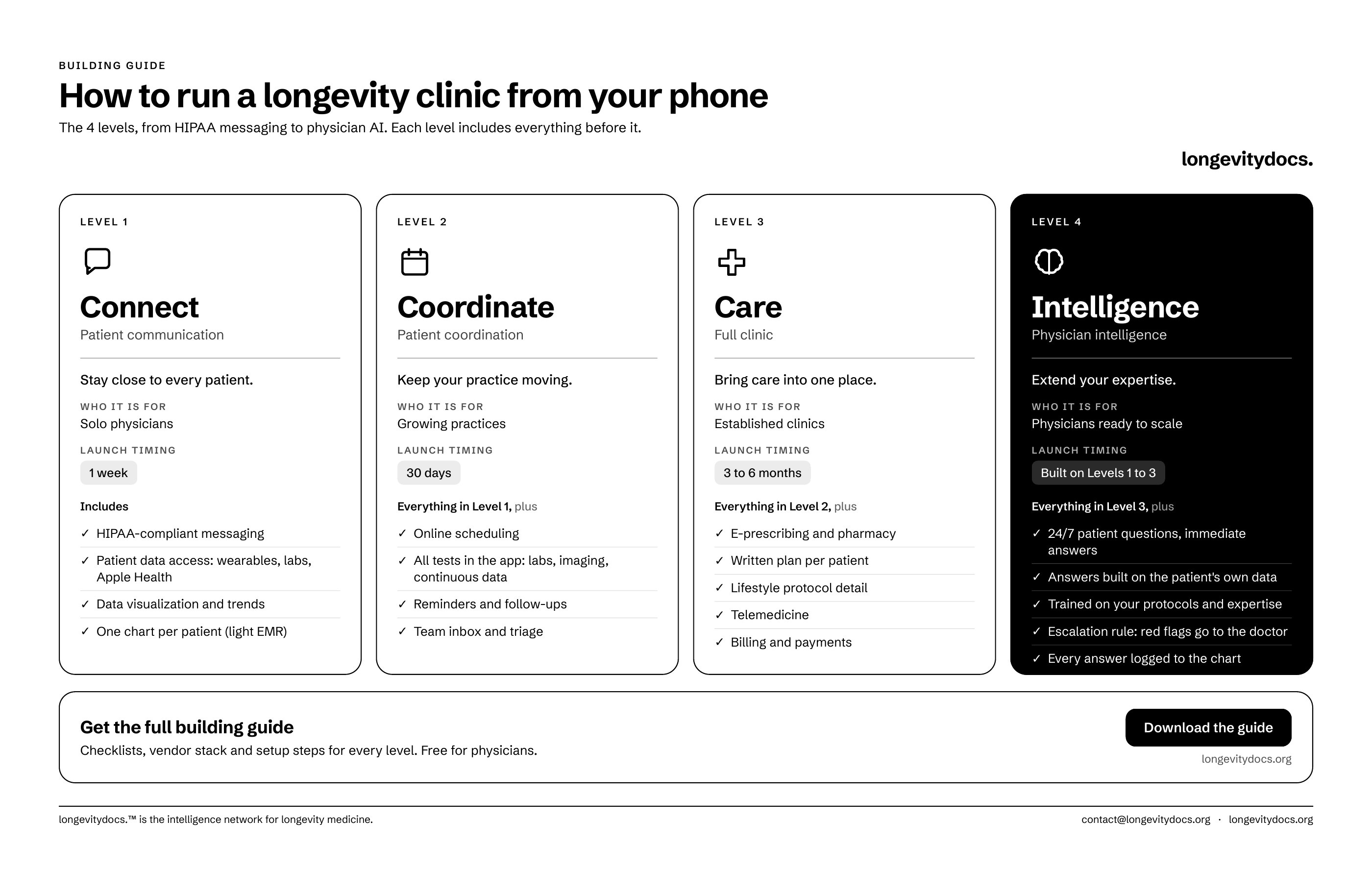
Four levels of the longevity clinic on a phone:
Level 1: patient communication
HIPAA-compliant messaging, and the patient’s data in front of both of you, visualized. Wearables, labs, trends. Most physicians can be here in a week.
Level 2: patient coordination
Scheduling, all tests in the app: labs, imaging, continuous data, reminders, your team in the loop. The admin layer, without the front desk.
Level 3: the full clinic
Prescriptions and pharmacy, a written plan, lifestyle detail, and direct access to the physician including telemedicine. Everything a visit does, from the phone.
Level 4: physician intelligence
A fully customizable platform where a patient asks any question and gets an immediate answer, built on their own data and the knowledge and expertise of their specific doctor. Your brain, your protocols, your judgment, available at 2 a.m. It knows when to say “this one goes to the doctor.”
Levels 1 to 3 put your clinic on the phone. Level 4 puts you on the phone.
Apple built the patient side and branded it. The doctor side is still yours to build. Every Health Age and every lab number is a question, and the question lands on a doctor. Pick your level this week. The patient with a $119 panel and a Health Age of 52 is already looking for someone to call.
Download the building guide


An AI-designed drug moved six aging clocks. In IPF patients. For 12 weeks.
Zhavoronkov et al., Nature Biotechnology, Sep 7, 2026
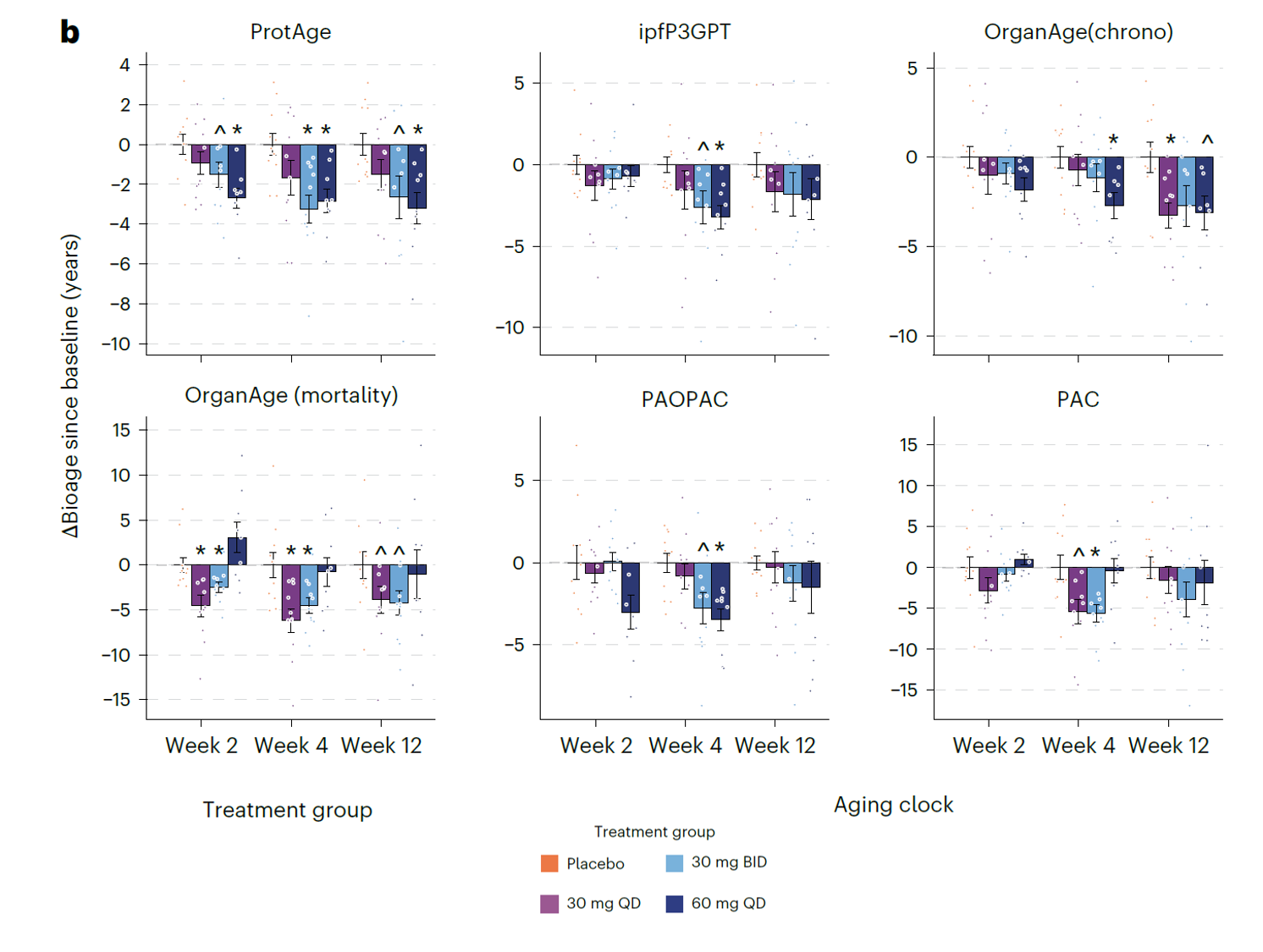
Proteomic substudy of the Phase 2a IPF trial of rentosertib, Insilico’s TNIK inhibitor (n=42). Six proteomic aging clocks, Insilico’s and independent, all shifted younger versus placebo, clearest at 30 mg BID around week 4. Clock change and FVC gain only partially tracked each other. The authors say it themselves: clocks cannot separate an anti-fibrotic effect from a geroprotective one.
For longevitydocs: credit to the team for putting the clocks inside the trial. That took foresight, and a positive readout like this one is good news for all of us. It shows what aging endpoints can look like in a real disease trial, and it opens the door for others to do the same. The design is the template: aging-first target, disease indication, multi-clock readout.
Ask about the parents. It beats the polygenic score.
Seidu et al., GeroScience, Sep 11, 2026
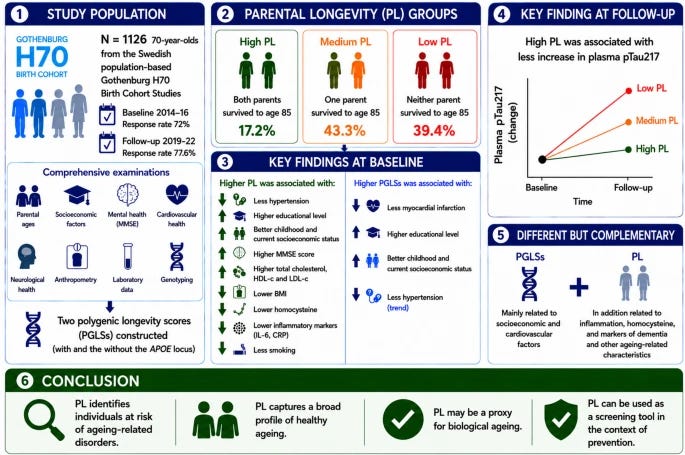
1,126 Swedish 70-year-olds, followed six years. Having two parents who lived past 85 tracked with less hypertension, higher MMSE, lower BMI, lower homocysteine, lower IL-6 and CRP, less smoking, and a slower rise in plasma pTau217. A GWAS-derived polygenic longevity score only tracked with socioeconomic factors and fewer heart attacks. The two measures did not correlate. Inflammation and pTau217 findings did not survive multiple-comparison correction. White cohort, self-reported parental ages.
For longevitydocs: the cheapest longevity biomarker in your intake is two questions about the patient’s parents. Add parental age at death to your history if it is not there.
Caloric restriction improves an aging-biomarker index. Half of it is not the weight.
Cassidy A. Guida, et al. 2026 - Geroscience
Pooled individual data from seven caloric restriction RCTs (n=829, mean age 67, mostly overweight or obese). A composite of CRP, IL-6, cystatin C, insulin, GDF-15 and TNF-R1 improved with CR. Weight loss explained about half the effect. The other half held after adjustment.
For longevitydocs: good news for anyone running a lifestyle or obesity program, and a nice piece of work from the authors for pooling seven trials at the individual level. Two things to take into the clinic. Measure response on a multi-marker panel, not on a single biological age score. And tell your patients the benefit goes beyond the number on the scale. Surrogate endpoints, not hard outcomes yet, but the direction is encouraging.

Lexicon
Oxytocin
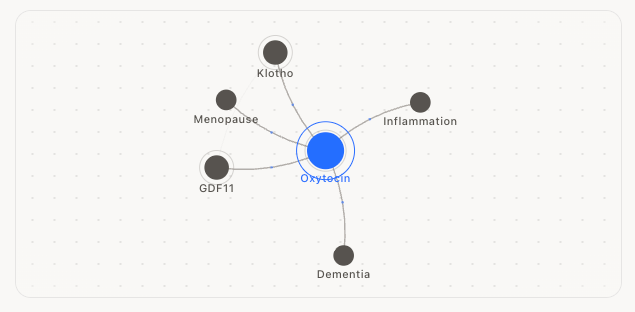
Oxytocin is a nonapeptide hormone that has a central role in the regulation of parturition and lactation. It is a peptide hormone secreted from the pituitary that is also released in the brain, where it acts as a neuromodulator to shape several aspects of social behavior.
It regulates the salience of social cues through its interaction with the dopaminergic system, and its effects depend on context and on individual differences such as gender, personality traits, and degree of psychopathology, so it can induce antisocial effects including aggression and envy
As women transition into menopause, oxytocin levels decrease while their susceptibility to mood disorders, poor sleep, osteoporosis, and cardiovascular diseases increases, highlighting oxytocin as a potential influence on the health and mood of women across the reproductive life span.
For longevitydocs: oxytocin is showing up in menopause and bone conversations. Know the physiology before a patient asks about the nasal spray.
Certification
What you should know when prescribing exercise
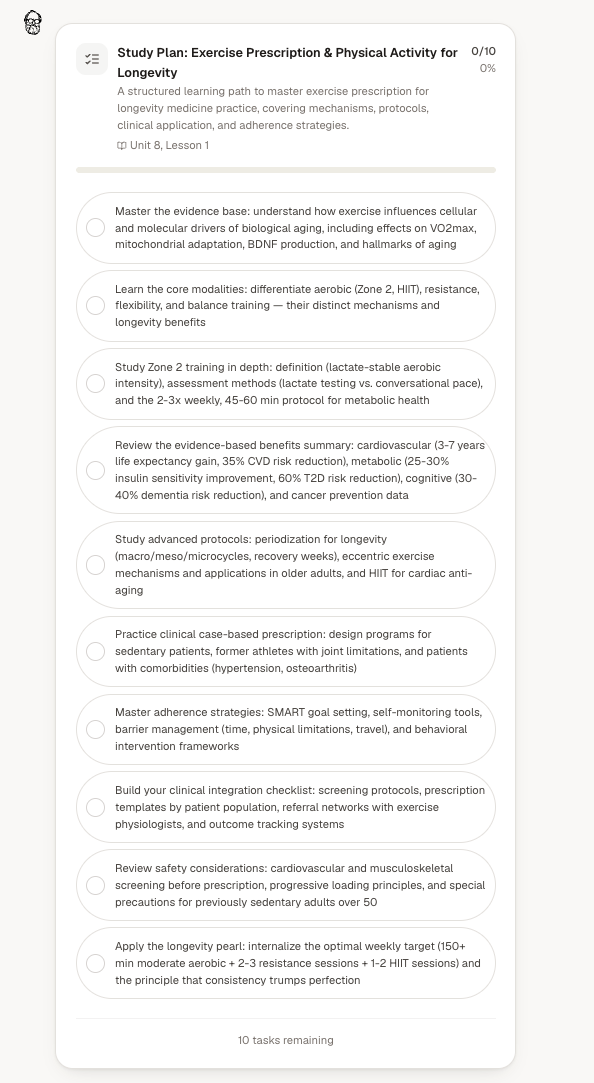
Hippo, the physician AI inside longevitydocs, now builds your learning checklist from the exercise module. Tick what you already know. Hippo tracks the rest and points you to the session that covers it.

Buzz in the chat
TRT training resources for physicians: guidelines versus AI-generated curricula
A member asked if colleagues could recommend a TRT course. Another member responded that formal TRT certification courses aimed at physicians are largely commercialized products geared toward non-physician prescribers and amount to a money grab; his recommendation was to start with the AUA guidelines and the Endocrine Society guidelines, noting the latter are solid but on the conservative side.
A third member suggested an alternative: using an LLM such as Claude with a detailed structured prompt to generate a custom physician-level curriculum. He shared a comprehensive prompt covering diagnostic workup, primary versus secondary hypogonadism differentiation, treatment modalities with dosing, monitoring, side effect management, contraindications, fertility-preserving alternatives, and informed consent, with instructions to cite current guideline positions and flag areas of ongoing controversy.
Two other members offered an important caveat: LLMs default back to standard medical society guidelines even when prompted otherwise, and the longevity practice mindset does not fit neatly into conventional guidelines. One added that prescribers need to understand both the guideline baseline and how to frame off-label or outside-standard-of-care options for patients exercising the right to try, within a medically supervised integrative framework.
Key points
Formal TRT certification courses for physicians are largely commercialized and aimed at non-physician prescribers; the AUA and Endocrine Society guidelines are a more reliable starting foundation.
The Endocrine Society guidelines provide a solid baseline but are conservative relative to longevity practice standards.
An LLM can generate a structured physician-level TRT curriculum when given a detailed prompt, but the output must be reviewed carefully and customized.
LLMs default to standard guidelines even when prompted with longevity framing, so the output is a starting scaffold, not a finished curriculum.
Physicians practicing outside standard guidelines should be able to document and explain off-label decisions and frame them clearly within medically supervised integrative care.
Evidence: Member discussion; not clinical or regulatory guidance
Member profile
Jila Senemar, MD, CLD

Board-certified OB/GYN in Miami, 20 years in practice, certified menopause specialist, mother of three. Jila spent two decades treating perimenopause and menopause the conventional way. Then she moved the practice toward women’s longevity: metabolic health, hormones, sleep, mood and sexual health managed as one plan rather than five referrals.
She built a community around it. Women across Miami and Coral Gables now come to her for midlife care that starts earlier and looks further ahead. Physicians in the network come to her for the same reason.
She graduates this year as a Certified Longevity Doctor. Women’s longevity is one of the fastest-growing rooms in longevitydocs, and Jila is one of the reasons.
In the app
Cases of the week is live
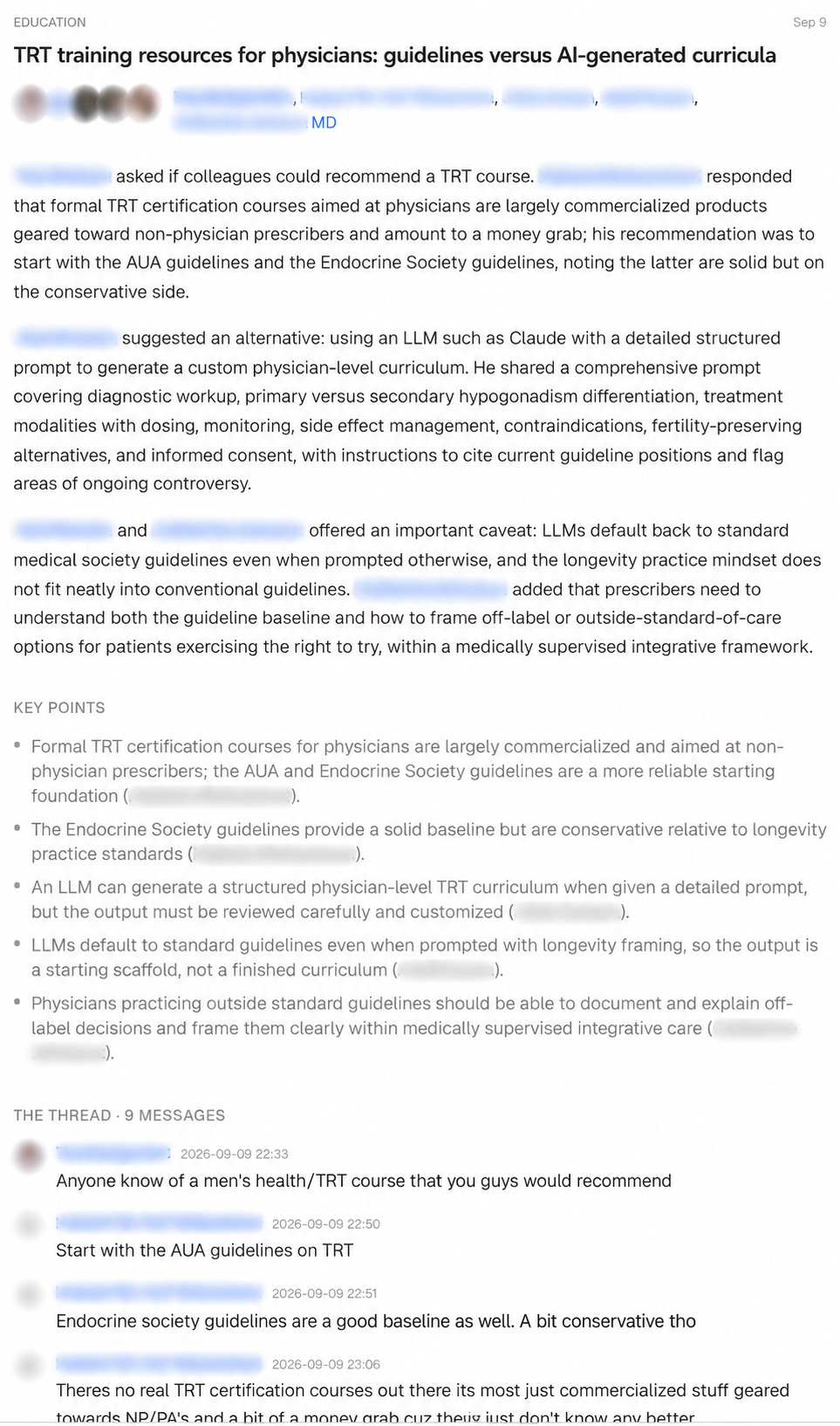
Every week we turn the best conversations in the network into a Case you can read in five minutes. Each one gives you the summary, the key points with the physicians who made them, and the full thread underneath. Read it, add your comment, or jump straight into the conversation.
Apply for membership (physicians only)
Calendar
Upcoming Events
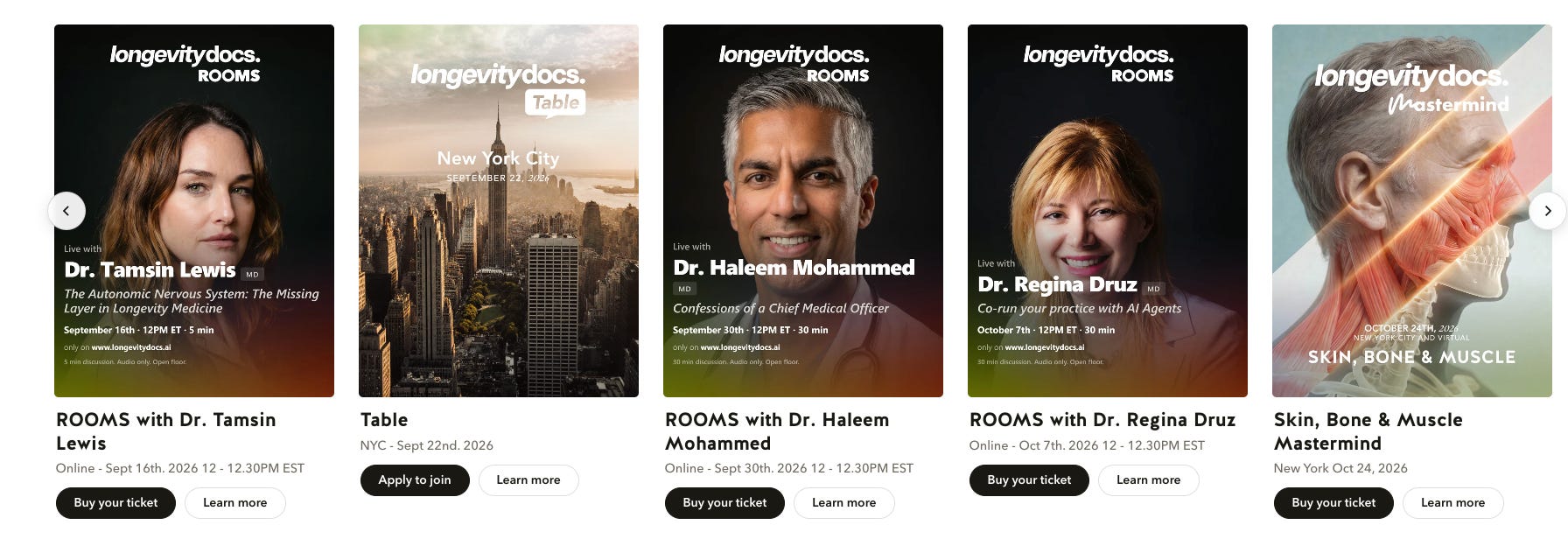
ROOMS with Dr. Tamsin Lewis
Online, Sept 16, 11 pm ET. Autonomous Nervous System
Table, New York City
Sept 22. Twelve physicians, one dinner. Reply to this email to request a seat.
ROOMS with Dr. Haleem Mohammed
Online, Sept 30, 12 pm ET. Confessions of a Chief Medical Officer
ROOMS with Dr. Regina Druz
Online, Oct 7, 12 pm ET. Co-run your practice with AI agents
Mastermind Skin, Bone and Muscle
New York and virtual, Oct 24
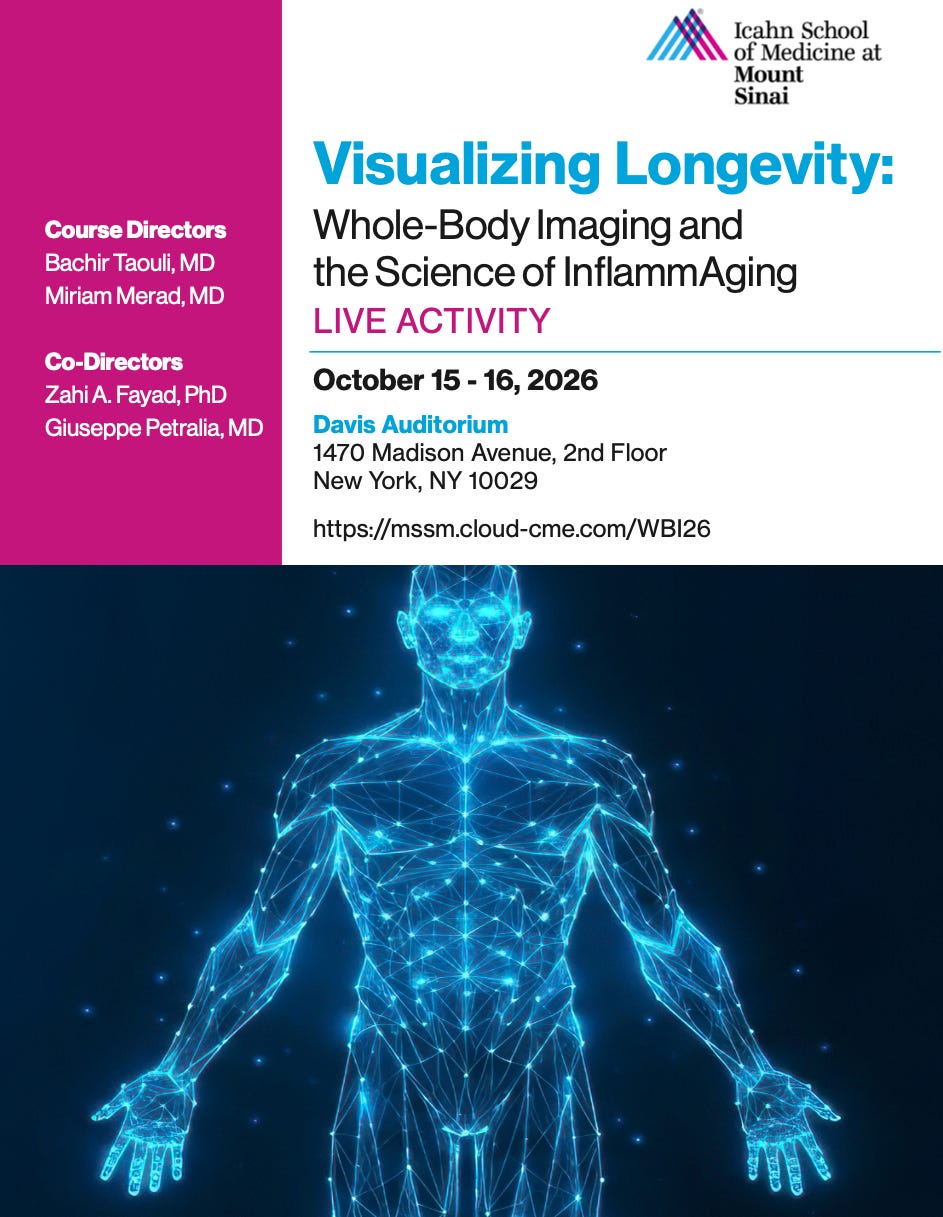
Visualizing Longevity: Whole-Body Imaging and the Science of InflammAging
Mount Sinai, New York, October 15 to 16. A CME course from our friends and partners at Icahn, directed by Zahi Fayad, PhD and Miriam Merad, MD on what whole-body imaging can and cannot tell you about aging.

Tech
Apple puts longevity inside the phone
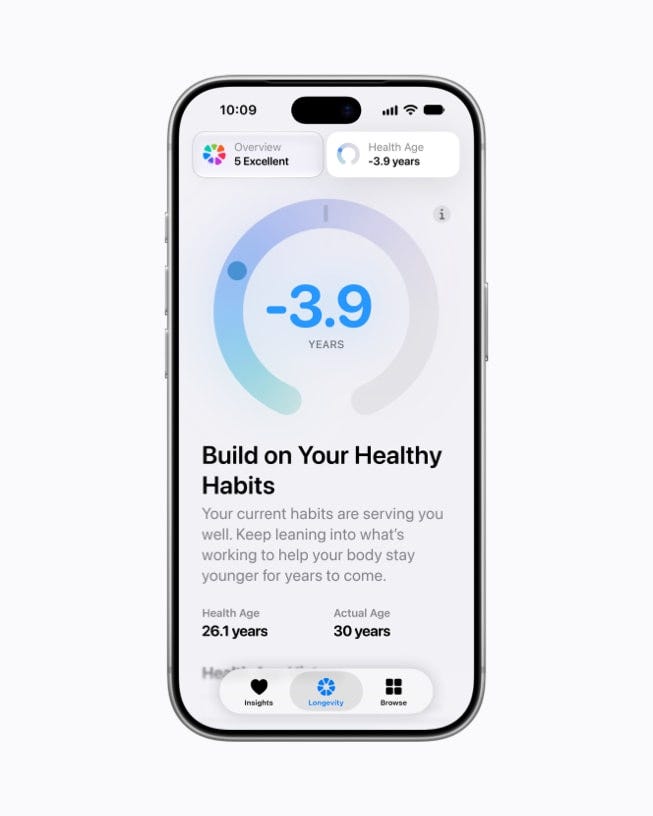
Covered in full above.
For longevitydocs: two things the essay skipped. Health Age needs an Apple Watch. A third-party clinician signs off on every Quest order, which means a doctor is already in Apple's loop. It just isn't you yet.
Consumer
System raises $20M to own the peptide supply chain
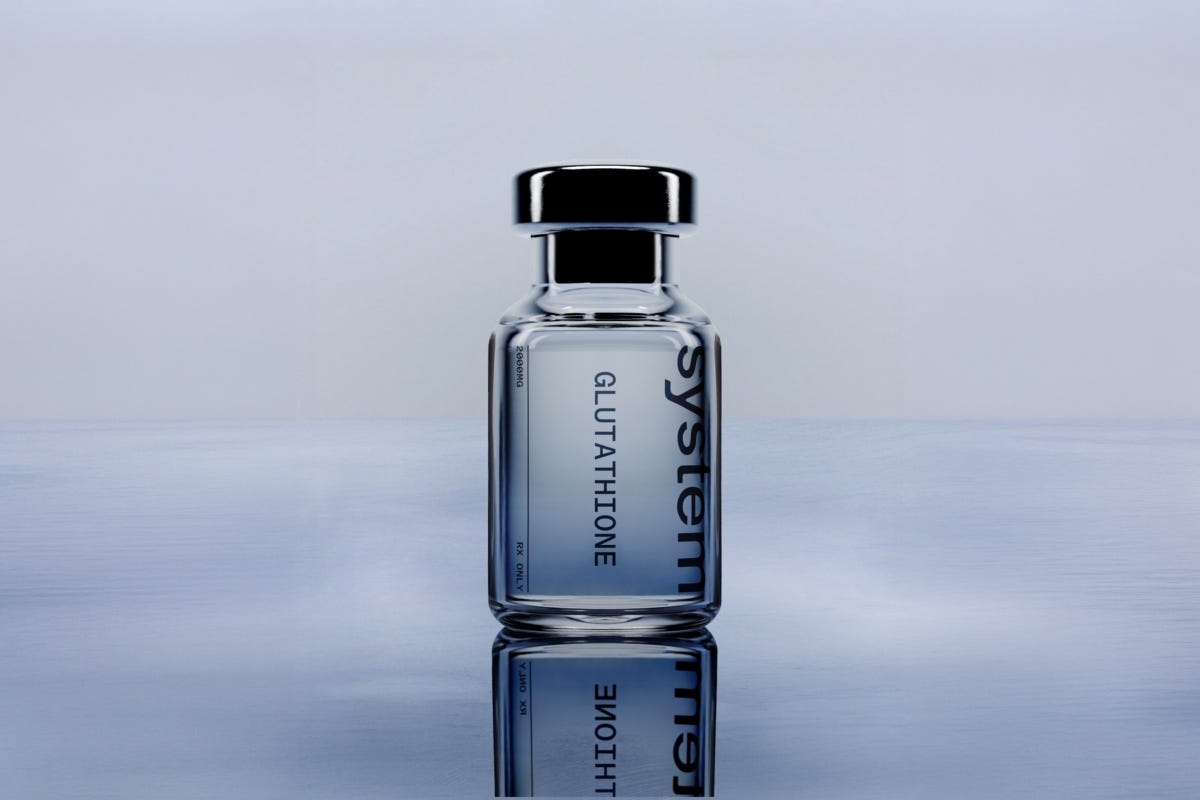
System raised $20M to run the full chain: patient, US-licensed clinician, certified compounding pharmacy, front door. Glutathione, NAD+, sermorelin and MIC+B12 on the menu, all 50 states, with API manufacturing on the roadmap.
For longevitydocs: peptides are becoming what supplements were ten years ago, and venture money is building the layer between the gray market and your exam room. Members will keep being asked for mail-order stacks. Set your formulary, your 503A/503B sourcing standard and your consent language before a platform sets them for you. A raise is not evidence. No peptide on that list is a longevity drug.
Bryan Johnson’s Immortals Concierge: from $75k to $1M
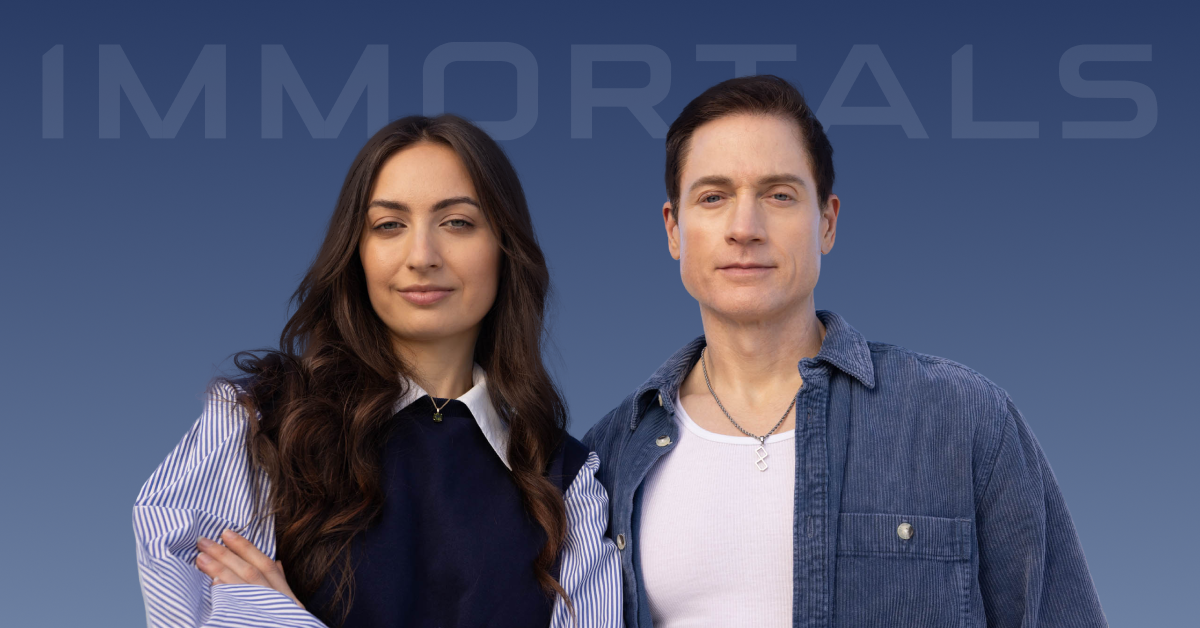
Fully managed care from Johnson's medical team. Dedicated physician, coach, coordinator, full-body MRI, coronary CT, multi-cancer early detection, DEXA, 200+ biomarkers, epigenetic workups, Whoop and Oura, Blueprint supplements. US only, cash pay, capped roster.
For longevitydocs: Read the service list again. Dedicated physician, full diagnostics, wearables, a protocol. Most of you have been doing this for years, solo or in a clinic. What Johnson adds is the brand, and the brand is what the premium customer pays for. At $75k to $1M, brand appears to matter as much as clinical expertise. No peer-reviewed evidence that the membership extends lifespan or healthspan. Your evidence bar is higher. Your brand should be too.

Every doctor should be a longevity doctor
longevitydocs.™ is the intelligence network for longevity medicine. 1,000+ physicians, 68 countries
Forward this to a colleague. Questions and corrections: reply to this email.
Editorial Disclaimer: