


Hey Doc,
Issue 102. I started watching Best Medicine on Netflix yesterday - don’t judge please. A heart surgeon leaves Boston for a village practice. He was used to treating the organ, fixing the patient, next. Now he sees his impact on the community he just moved into, good and bad.
What I like about Dr. Best is the relentlessness. The pursuit of the diagnosis, the appetite for investigation, the complete indifference to what anyone thinks of him, and the coldness with which he educates - he could be a bit warmer though. Watch his personality shift across the episodes. I recognized something. I did the same thing for years. Fix the heart, not the health.
That is what this week’s cover story is about. Why more doctors are moving into longevity medicine.
And no, this is not an invitation to binge Netflix!
As always, Happy Sunday.
Dr. David Luu, Founder, longevitydocs.™

Go deeper on one concept every week from the LongevityDocs Lexicon.
Lipoprotein(a)
Also known as Lp(a), Lpa, apo(a)
Definition
Lipoprotein(a) [Lp(a)] is an apoB100-containing lipoprotein whose two major protein components are apoB100 and apolipoprotein(a), and high levels are an independent and causal risk factor for atherosclerotic cardiovascular disease. [1] Lp(a) is predominantly a monogenic (genetically determined) cardiovascular risk determinant, with roughly 70% to 90% of the interindividual variation in levels being genetically determined. [1] High Lp(a) concentrations are present in about 10% to 20% of the population and, on a genetic basis, affect an estimated more than one billion individuals worldwide. [2]
How it works
High Lp(a) drives atherosclerotic cardiovascular disease through mechanisms associated with increased atherogenesis, inflammation, and thrombosis. [1] Epidemiologic and genetic studies involving hundreds of thousands of individuals strongly support a causal and continuous association between Lp(a) concentration and cardiovascular outcomes across different ethnicities, and elevated Lp(a) remains a risk factor even at very low levels of LDL cholesterol. [3] Lp(a) has pro-inflammatory and pro-atherosclerotic properties that may partly relate to the oxidized phospholipids it carries, and high Lp(a) is associated with both microcalcification and macrocalcification of the aortic valve. [3] Effect sizes are most pronounced for myocardial infarction, peripheral arterial disease, and aortic valve stenosis, where high Lp(a) concentrations predict roughly 2- to 3-fold increases in risk. [2]
Connected concepts
How it’s measured
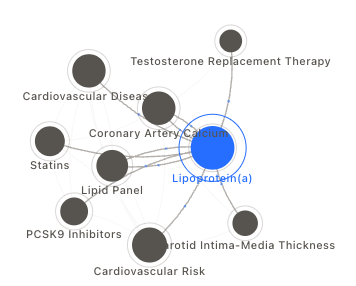
Lp(a) measurement should be performed using well-validated assays with traceability to a recognized calibrator so that common cut-offs for high concentrations and risk assessment can be applied. [2] A recognized limitation is that the field still lacks full standardization and harmonization of assays and universal guidelines for diagnosis and risk assessment. [1] Multiple cardiovascular societies now recommend measuring Lp(a) concentration at least once in all adults, with cascade testing having potential value in familial hypercholesterolaemia or with a family or personal history of very high Lp(a) or premature ASCVD. [3] [4] European consensus recommendations note that Lipoprotein(a) cholesterol is contained within the LDL cholesterol reported on the standard Lipid Panel, and advise estimating it in all patients at risk of atherosclerotic cardiovascular disease [5]
What levels mean / management
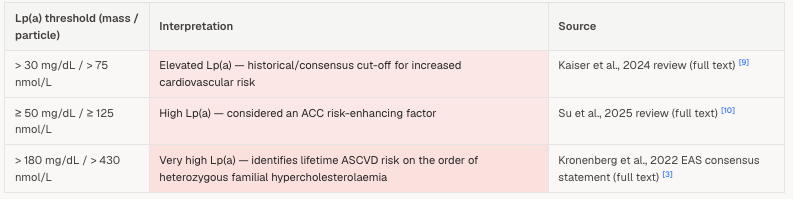
In a participant-level meta-analysis of statin-treated individuals, those with an Lp(a) level above 50 mg/dL (about 125 nmol/L) had increased ASCVD risk across all quartiles of achieved LDL-C, confirming Lp(a) as a risk driver independent of LDL-C control. [6] Because no Lp(a)-specific lowering therapy is yet approved for outcome reduction, current guidance is early, intensive management of all other modifiable cardiovascular risk factors in people with elevated Lp(a). [3] Statins do not reduce Lipoprotein(a) and instead tend to increase its levels, an effect proposed to contribute to the residual cardiovascular risk observed in statin outcome trials and clinical practice [7] In primary prevention, elevated Lipoprotein(a) acts as a risk-enhancing factor that refines calculator-based cardiovascular risk estimates, complemented by subclinical atherosclerosis testing with Coronary Artery Calcium scoring to guide preventive therapy decisions [8]
Community knowledge
Lipoprotein(a), or Lp(a), is a genetically determined, LDL-like particle with pro-inflammatory and prothrombotic properties that carries substantial atherosclerotic, thrombotic, and aortic-stenosis risk.
Dr. Giovanni Campanile has described Lp(a) as a silent, largely genetically fixed risk factor for which no direct therapy is yet approved, recommending once-in-a-lifetime measurement and cascade testing of first-degree relatives, and noting that high-dose statins can paradoxically raise Lp(a) while PCSK9 inhibitors and apheresis lower it a; he has also emphasized the ApoB/ApoA1 ratio as a highly predictive treatment target d
Dr. Jessica Shepherd, Dr. Saranya Wyles, Dr. Giovanni Campanile, and Dr. Elizabeth Poynor jointly noted that Lp(a) is not perfectly constant and can rise with inflammatory states, remaining a several-fold stronger risk factor than LDL when elevated at any point in life c.
Dr. Simar Randhawa has echoed the guidance to consider trending Lp(a) over time and to lower ApoB and the ApoB/ApoA1 ratio when direct Lp(a) reduction is not yet available b.
The Longevitydocs community have noted that dedicated Lp(a)-lowering agents are anticipated and may become options for high-risk patients.
References
Rooms
a. How should we treat high Lp(a)? with Dr. Giovanni Campanile
b. Dr. Simar Randhawa
Summit
c. Women’s Longevity 360, Dr. Jessica Shepherd, Dr. Saranya Wyles, Dr. Giovanni Campanile, and Dr. Elizabeth Poynor
Faculty Lectures
d. Unlocking Secrets of Heart Health, Dr. Giovanni Campanile
Peer-Reviewed Publications
1.Reyes-Soffer G, Ginsberg HN, Berglund L, Duell PB, Heffron SP, Kamstrup PR, Lloyd-Jones DM, Marcovina SM. Lipoprotein(a): A Genetically Determined, Causal, and Prevalent Risk Factor for Atherosclerotic Cardiovascular Disease: A Scientific Statement From the American Heart Association. Arterioscler Thromb Vasc Biol · 2022
2.Kamstrup PR. Lipoprotein(a) and Cardiovascular Disease. Clin Chem · 2021
3.Kronenberg F, Mora S, Stroes ESG, Ference BA, Arsenault BJ, Berglund L, Dweck MR, Koschinsky M. Lipoprotein(a) in atherosclerotic cardiovascular disease and aortic stenosis: a European Atherosclerosis Society consensus statement. Eur Heart J · 2022
4.Anchouche K, Baass A, Thanassoulis G. Lp(a): A Clinical Review. Clin Biochem · 2025
5.Nordestgaard BG, Langlois MR, Langsted A, Chapman MJ, Aakre KM, Baum H, Borén J, Bruckert E, Catapano A, Cobbaert C, Collinson P, Descamps OS, Duff CJ, von Eckardstein A, Hammerer-Lercher A, Kamstrup PR, Kolovou G, Kronenberg F, Mora S, Pulkki K, Remaley AT, Rifai N, Ros E, Stankovic S, Stavljenic-Rukavina A, Sypniewska G, Watts GF, Wiklund O, Laitinen P. Quantifying atherogenic lipoproteins for lipid-lowering strategies: Consensus-based recommendations from EAS and EFLM. Atherosclerosis · 2020
6.Bhatia HS, Wandel S, Willeit P, Lesogor A, Bailey K, Ridker PM, Nestel P, Simes J. Independence of Lipoprotein(a) and Low-Density Lipoprotein Cholesterol-Mediated Cardiovascular Risk: A Participant-Level Meta-Analysis. Circulation · 2025
7.Tsimikas S. A Test in Context: Lipoprotein(a): Diagnosis, Prognosis, Controversies, and Emerging Therapies. J Am Coll Cardiol · 2017
8.Goldsborough E, Osuji N, Blaha MJ. Assessment of Cardiovascular Disease Risk: A 2022 Update. Endocrinol Metab Clin North Am · 2022
9.Boffa MB, Koschinsky ML. Lipoprotein(a) and cardiovascular disease. Biochem J · 2024
10.Xu R, Wang Z, Dong J, Yu M, Zhou Y. Lipoprotein(a) and panvascular disease. Lipids Health Dis · 2025

New feature: Audio courses are live in the CLD
You asked. We built it. Every unit now has an audio version.
Courses used to need a free weekend, or a cold conference room in a suburban hotel. Now all you need is headphones. Hit play and the lecture runs while you drive, train, cook, or pretend to listen to family reunion. Adjust the speed and get through it faster.
Open School in the app, try the audio, and tell us what you think of the voice we picked.

Each week, I try to explore one idea that could advance longevity medicine and hopefully support physicians in bringing it to life.
Why More Doctors Are Moving Into Longevity Medicine. Part 1/4
Over the next four weeks I am writing one story a week for the physicians thinking about this move. Why doctors are making it. How to actually start a practice. The ecosystem you have to build around it. And what the work looks like in practice. Then on September 13, something opens.
Imagine thirteen minutes to work out what is wrong with your patient, order the tests, interpret them, prescribe, educate, and feel like you practiced medicine. You cannot.
So the visit ends, the patient leaves with the prescription he came in for, and goes looking for the real answer somewhere else. Another doctor, a med spa, a chatbot.
Probably not what you signed up for after ten years of training. You know exactly what I am talking about.
Nearly half our Certified Longevitydocs, across 29 countries, come from primary care, emergency medicine and internal medicine. That surprises people who assume this is a boutique subspecialty for concierge doctors. It is not. The doctors building this field came from the frontline, and they left it wanting better care for their patients.
Ten reasons they give
1. Prevent disease instead of managing its complications
Treat the atherosclerosis, not the heart attack.
2. Spend time on medicine
Ninety minutes with a patient instead of ninety minutes on prior authorization.
3. Get paid for outcomes, not volume
Right now, seeing thirty patients badly pays more than seeing ten well.
4. Write protocols for the patient in front of you
Not wait for a committee, not inherit a pathway built for a population that is not yours.
5. Follow patients long enough to know the protocol worked
Watch the biomarkers improve instead of referring the patient and never finding out.
6. Answer what patients are already asking
When they ask about peptides, be the one who answers instead of the influencer.
7. Own the reputation
Patients come to you, not to the logo on the building.
8. Own the business
A panel of 150 at $5,000 instead of 2,000 patients you never really see.
9. Live what you prescribe
Stop advising people on sleep while running on five hours yourself.
10. Freedom.
Which is what the other nine add up to.
What nobody tells you
The first year is hard. You are building a business you were never trained to build. Pricing used to be done by the insurer. Now it is yours. So are the protocols, finding your first patients, choosing the technology, hiring the team. Nobody does this alone. That is what opens on September 13.
Next Sunday: Part 2/4 - How to actually start a longevity practice, including what the first year costs and earns.

Each week, I give you a sneak peek on topics discussed in our community.
The Retatrutide risks
Lilly sued six companies for selling unapproved retatrutide. Med spas, compounding pharmacies and online sellers, most shipping “research use only” product for human use. More than 200 additional entities were referred to FDA, DOJ, state attorneys general, law enforcement and professional licensing boards. Read that last one twice. Retatrutide is still Phase 3 with no approval anywhere, filing now expected in Q1 2027, and FDA said in June that it cannot lawfully be compounded. Lilly also asked payment processors and credit card companies to cut sellers off, so check your merchant terms this week. If retatrutide is in your practice, you are at risk.
Build your own lab panel
Cash-pay lab access came up hard this week, mostly out of New York where client billing is not permitted. Some physicians route patients through indigent pricing at Quest or Labcorp, up to 80 percent off. Know what that program is. It is reserved for patients with genuine financial hardship, the requisition has to say so, and it is not a pricing strategy for a cash-pay practice. The better answer came from members who stopped working around the big labs and built their own. A custom panel designed with a lab partner, roughly $400 all in, scheduled pickups, and the exact markers you actually need.
Longevitydocs is the vetted network for longevity doctors
1,200+ Physicians across 68 Countries

Sneak peek: the Skin, Bone and Muscle Mastermind
October 24, 2026 • New York City

Why skin, bone and muscle
It is the front door of longevity care. It is what the patient sees first, what brings them in, and what they use to judge whether any of this is working.
And it is a triad, not three separate problems. Bone and muscle fail together. Skin reports on what is happening in both. Manage them in isolation and you get exactly the results the field has been getting.
The medical community still underrates it. Cardiometabolic gets the seriousness, skin and musculoskeletal get filed under aesthetics, and the patient goes looking for answers somewhere other than a physician’s office.
That is the gap we are closing in one day.
Physician-led sessions. Every one sends you home with a protocol or a framework. Full program drops next week. Here is a sneak peek:
Skin, Bone and Muscle. The clinical triad of healthy longevity.
The Evidence. Where the science stands today, and where it is going.
New Diagnostics. The biomarkers, AI and devices you can use in practice now.
The GLP-1 Tax. Protecting skin, bone and muscle in patients already on the drug.
The Regenerative Menu. Stem cells, peptides and photons, with a risk-tiered framework for each.
Advanced Protocols. What to implement, and in whom.
The Debate. Where the money is versus where the data is. Choosing a service line you can defend in five years.
Front-row access to the physicians pioneering skin, bone and muscle longevity. One day in New York City. Breakfast, lunch and a VIP dinner. Clinical protocols and scientific breakthroughs you can put to work Monday.
For physicians only. Limited to 150.

CLD Zoom in: one section of the Certified Longevitydocs program(CLD)
Beyond Statins
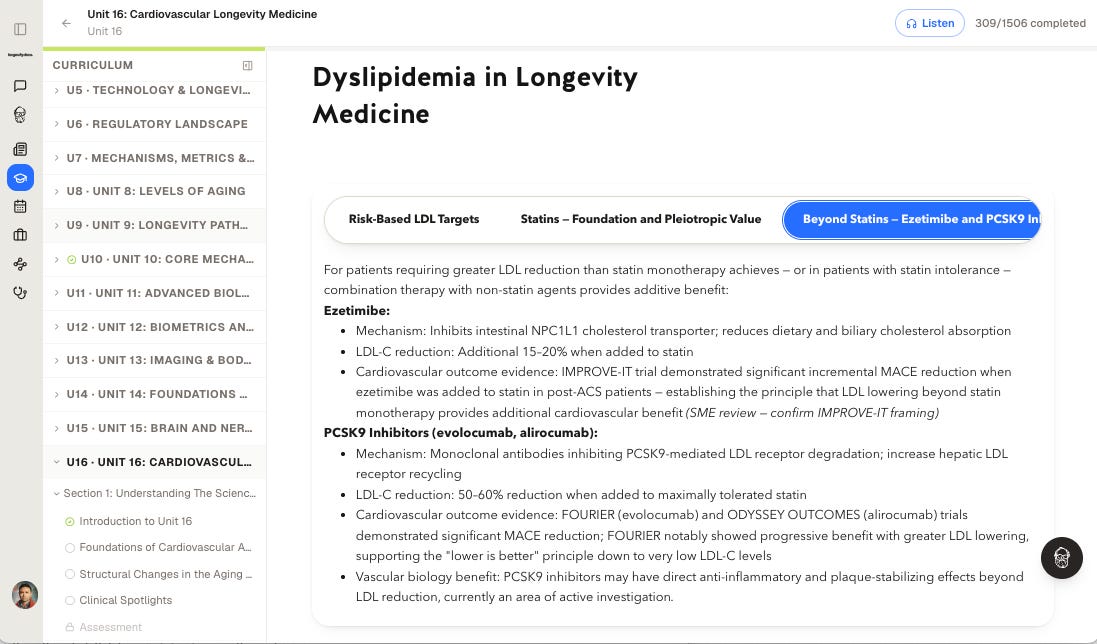
For patients requiring greater LDL reduction than statin monotherapy achieves — or in patients with statin intolerance — combination therapy with non-statin agents provides additive benefit:
Ezetimibe:
Mechanism: Inhibits intestinal NPC1L1 cholesterol transporter; reduces dietary and biliary cholesterol absorption
LDL-C reduction: Additional 15–20% when added to statin
Cardiovascular outcome evidence: IMPROVE-IT trial demonstrated significant incremental MACE reduction when ezetimibe was added to statin in post-ACS patients — establishing the principle that LDL lowering beyond statin monotherapy provides additional cardiovascular benefit
PCSK9 Inhibitors (evolocumab, alirocumab):
Mechanism: Monoclonal antibodies inhibiting PCSK9-mediated LDL receptor degradation; increase hepatic LDL receptor recycling
LDL-C reduction: 50–60% reduction when added to maximally tolerated statin
Cardiovascular outcome evidence: FOURIER (evolocumab) and ODYSSEY OUTCOMES (alirocumab) trials demonstrated significant MACE reduction; FOURIER notably showed progressive benefit with greater LDL lowering, supporting the “lower is better” principle down to very low LDL-C levels
Vascular biology benefit: PCSK9 inhibitors may have direct anti-inflammatory and plaque-stabilizing effects beyond LDL reduction, currently an area of active investigation.
Unit 16 - Cardiovascular Longevity Medicine. Sections are reviewed and updated continuously as the evidence moves.
Become Longevity Fluent
The only longevity medicine curriculum built for physicians, by physicians.

Histological aging signatures for monitoring tissue-specific aging and disease
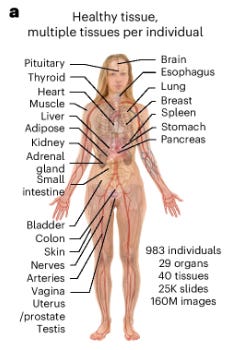
Aging is the primary risk factor for chronic disease and is characterized by profound structural and architectural remodeling of human tissues. Here, we present a comprehensive assessment of these changes using 25,712 whole-slide histopathological images from 40 tissue types across 983 individuals in the Genotype-Tissue Expression cohort. By leveraging deep learning, we quantified nuanced morphological alterations to develop ‘tissue clocks’, predictors of biological age that reflect tissue structural integrity and physiological fitness. These clocks correlate with established aging markers, such as telomere attrition, subclinical pathologies and comorbidities. Nature
Exercise intensity modulates interorgan communication and is associated with cardiometabolic health outcomes in humans
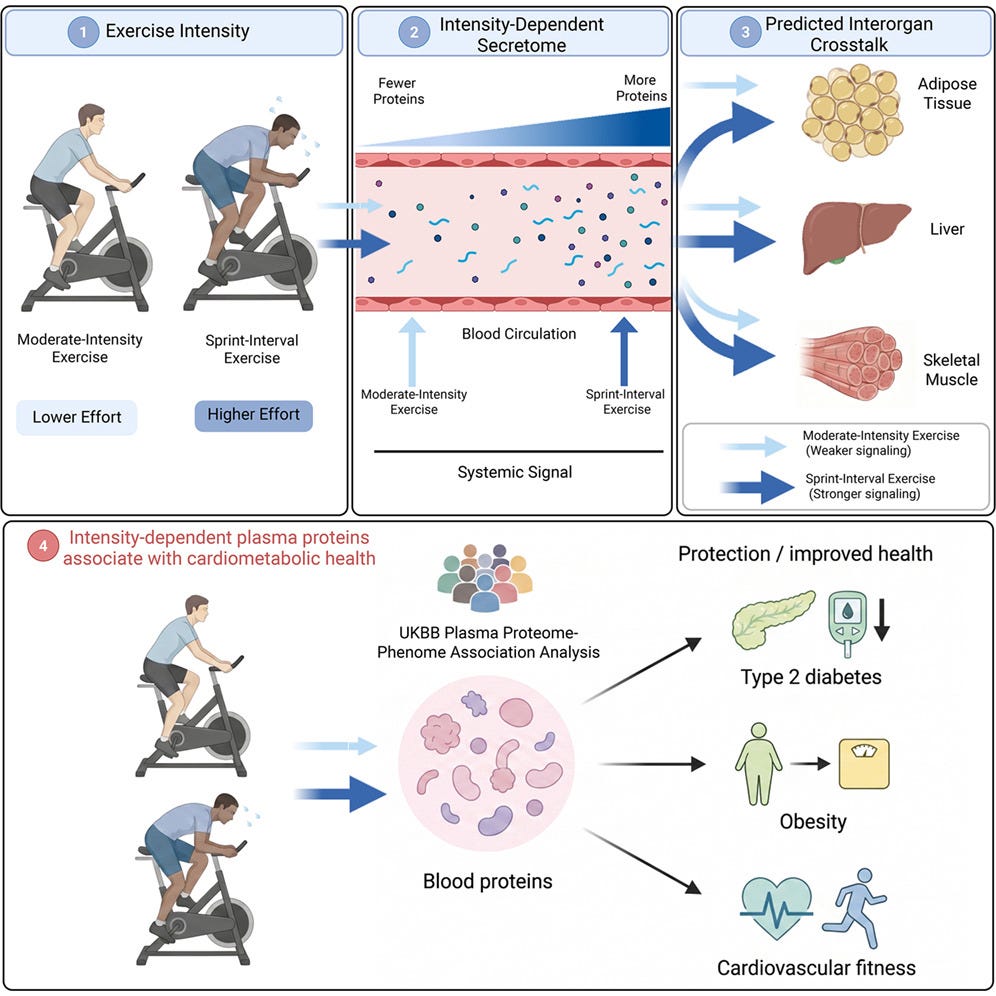
We found that exercise intensity distinctly influenced the plasma proteome and metabolome in untrained and trained participants. By integrating multi-organ gene and protein expression datasets with in vitro and in vivo tissue sampling, we mapped regulated proteins to their predicted tissues of origin and destination. Muscle fibers and adipocytes were particularly sensitive to exercise intensity and observed to undergo broad secretory and transcriptomic changes. Cell Reports Medicine

Every week, I track funding, FDA approvals, product launches, and breakthrough announcements shaping longevity medicine.
CARE
Hims & Hers planning to sell compounded peptides
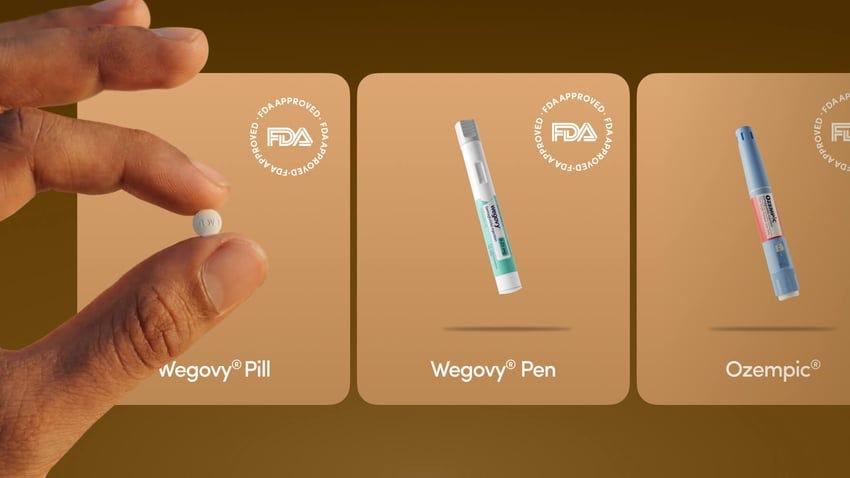
Hims & Hers Health is planning to sell compounded peptides, the company said in a Monday earnings call. The company’s CEO, Andrew Dudum, said in the earnings call that it was “currently developing a best-in-class peptides experience, including U.S. manufactured products, clinical-led guidance, and ongoing blood testing.” A public company announcing a compounded peptide line in the same week Lilly sued six peptide sellers is worth watching. The Hill
AI
Want concierge medicine? AI can deliver it
About 1 in 3 American adults have turned to a chatbot for health advice in the past year. Bots can sound like a concierge doctor. What AI does best is the underlying work: reading a patient’s health history, weighing symptoms and suggesting a treatment plan. AI is already in almost every pocket. It can transform healthcare with the record, the proof and the payment. Build them, and the forward-looking concierge care some have today could become available to anyone with a phone. WSJ
TECH
Google puts insulin resistance on the wrist

Google announced Health Guardian for Pixel Watch and Fitbit Air on Aug 12. Four features: insulin resistance trends (trained over a trillion minutes of data from 5 million opted-in users), estimated from multi-week physiological data with no blood draw. Blood pressure trends come from pulse and motion patterns with no cuff and no calibration. Sleep breathing quality tracks overnight, and breathing emergency detection can call emergency services on a critical oxygen drop. Google
PHARMA
The brain may be about to have its Ozempic moment

The Economist makes the case that orexins are the next GLP-1. FDA approved oveporexton on Aug 5, the first orexin agonist for narcolepsy, after a trial where patients stayed awake 12.5 to 25 minutes longer on the Maintenance of Wakefulness test and had roughly a third as many cataplexy attacks. Lilly bought Centessa in June for up to $7.8bn to get into the class. Morgan Stanley projects $16bn a year by 2035 from sleep disorders alone. The Economist
RESEARCH
XPRIZE Healthspan names 20 finalists
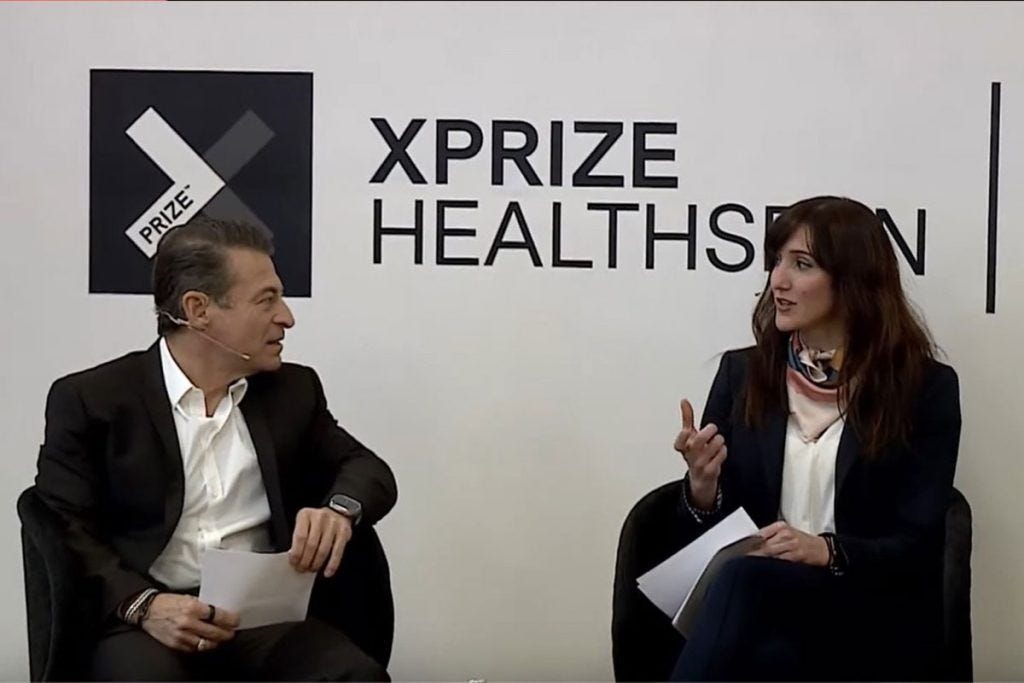
XPRIZE Healthspan named 20 finalists for the clinical phase of its $101 million competition, with ten teams taking $1 million each. Between 2026 and 2029 they run trials of up to one year in adults aged 50 to 90, aiming to restore muscle, cognitive and immune function lost to at least ten years of age-related decline, with 20 years as the stretch target. LongevityTechnology
The ten $1 million awardees:
AgelessRx (US)
Goda Lab, NanoTitan with University of Tokyo and Tokyo RELIFE Clinic (Japan)
Johns Hopkins-Suninflam, Suninflam Inc with Johns Hopkins University (US)
Longeveron, Inc (US)
Minicircle Inc (US)
Mitochondrial All Stars, Mighty Therapeutics with University of Washington (US)
NYC-Vita, Mount Sinai Health System (US)
RETRO-EPIGERNA, Macau University of Science and Technology (Macao SAR, China)
RPRGAON-Progeria, PRG S&Tech (South Korea)
TIME TRAVELER Plant-EVs (Japan)
SOCIETY
The $250,000 blood concierge

A non-physician concierge charging up to $250,000 a year to arrange unapproved therapies for wealthy clients. Peptides, stem cells, exosomes, infusions, delivered by private nurse with no baseline screening, no regulatory oversight and nobody accountable for outcomes. This is what fills the space when the field has no standard. Longevity medicine needs standardization and it needs to be judged on health outcomes, not on what a client can be sold. Vanity Fair

Every doctor should be a longevity doctor
longevitydocs.™ is the vetted network of longevity doctors - 1,200+ doctors. 68 countries.

Editorial Disclaimer:
Oh! I’m going to check out “Best Medicine,” thanks for the recommendation! Doc Martin is one of my favorite shows (the UK show that inspired the Netflix series). Great newsletter, as always! Longevity medicine is the best medicine and it takes a lot of heart ❤️
basically an AI-powered age-guesser for each organ, based purely on how the tissue looks under a microscope? Curious about longevity docs-if noemal time allotment is 212-15 min a patient in normal MD time-how much time do you feel can be alloted to each patient for Longevity medical practice?