


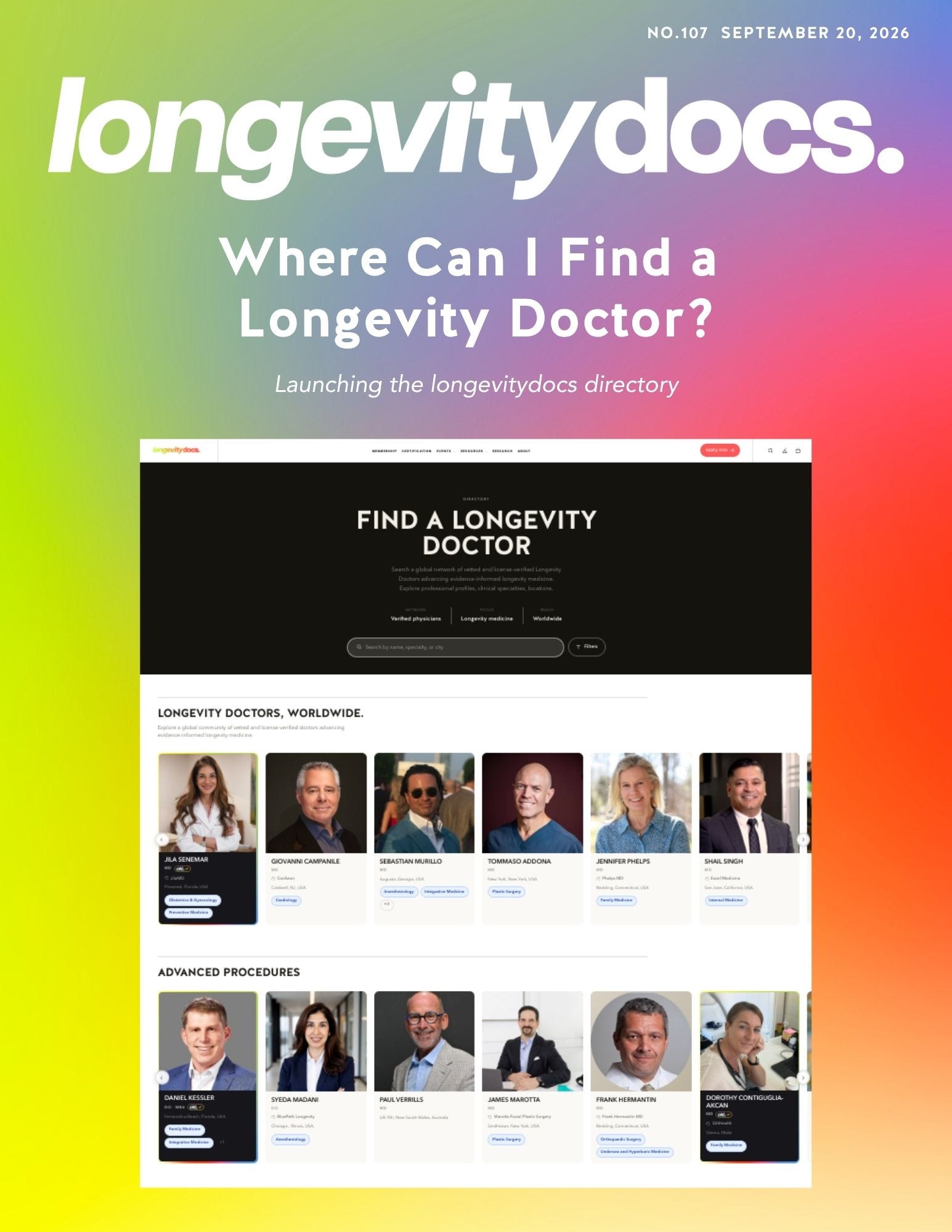
Issue 107. The question I get more than any other: where can I find a longevity doctor? For my family. For my company. For my board. Today we launch the longevitydocs Directory, a global network of vetted, license-verified longevity doctors practicing evidence-informed medicine.
Also inside: a speedometer for aging, a federal bill that would reach most med spas and deepfakes doctors selling drugs online.
Thank you to the 10,000+ readers across 119 countries.
As always, Happy Sunday.
Dr. David Luu, Founder, longevitydocs.™

Where can I find a longevity doctor?
We hear this question more every week. From patients: “Who is the best in New York?” From colleagues: “Do you know someone who works on hormones and longevity?” From a friend: “I need a cardiologist who goes deeper than the guideline.”
Five years ago, “longevity doctor” was not a category. Obesity medicine had no board certification before 2012. Cardiology had none before 1941. Specialties often begin as questions patients are already asking.
The patients asking today are different. They want answers before disease arrives, and they look online first: Instagram, TikTok, Google, Reddit, ChatGPT. None of those platforms can check a license, a training, or a claim. In a market where much of the longevity conversation is led by people who are not physicians, that gap matters.
So we built the place we wished existed.
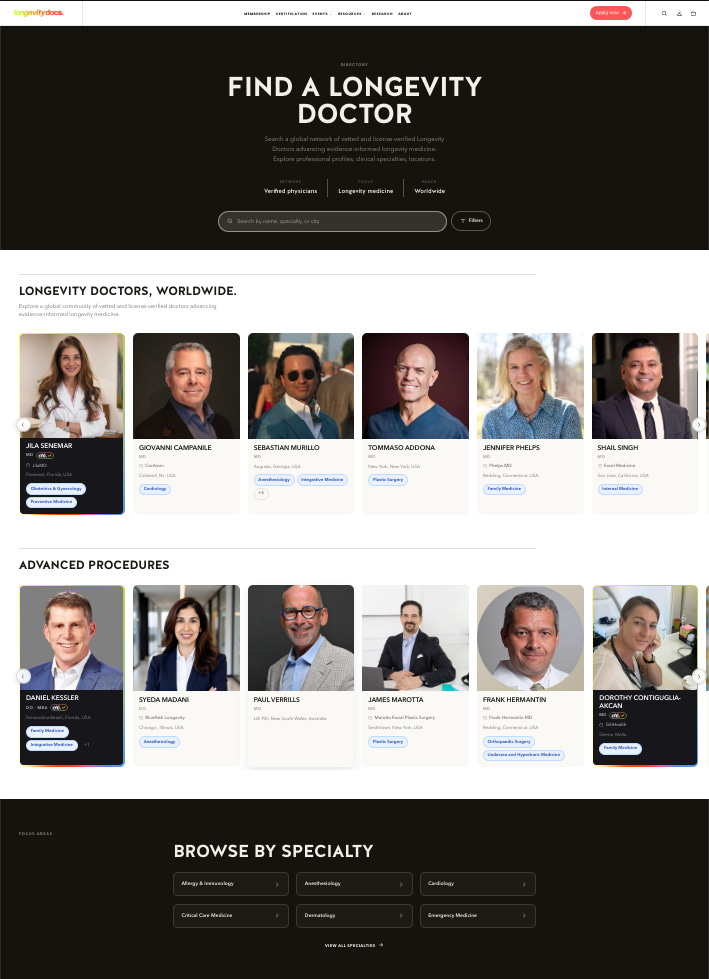
The LongevityDocs Directory. A global directory of licensed physicians practicing evidence-informed longevity medicine. Every profile says where the physician stands: certified, teaching the certification, completing it, or a member of the network. The status is on the card, in plain words.

Search by name, specialty, city or country. Read the profile, the specialties, and what the practice offers. Then contact the practice directly. The directory does not rank, recommend or endorse. It gives people a verified starting point and lets the physician take it from there.
Live now in New York, London, Miami, Dubai, Bengaluru, Melbourne, and virtual care worldwide.
If you are a physician practicing longevity medicine and not yet listed, reply to this email. We would like to hear from you.

Aging Rate Indicators (ARI) measure pace, not accumulated age
Austad et al, Frontiers in Science, Sept 17, 2026.
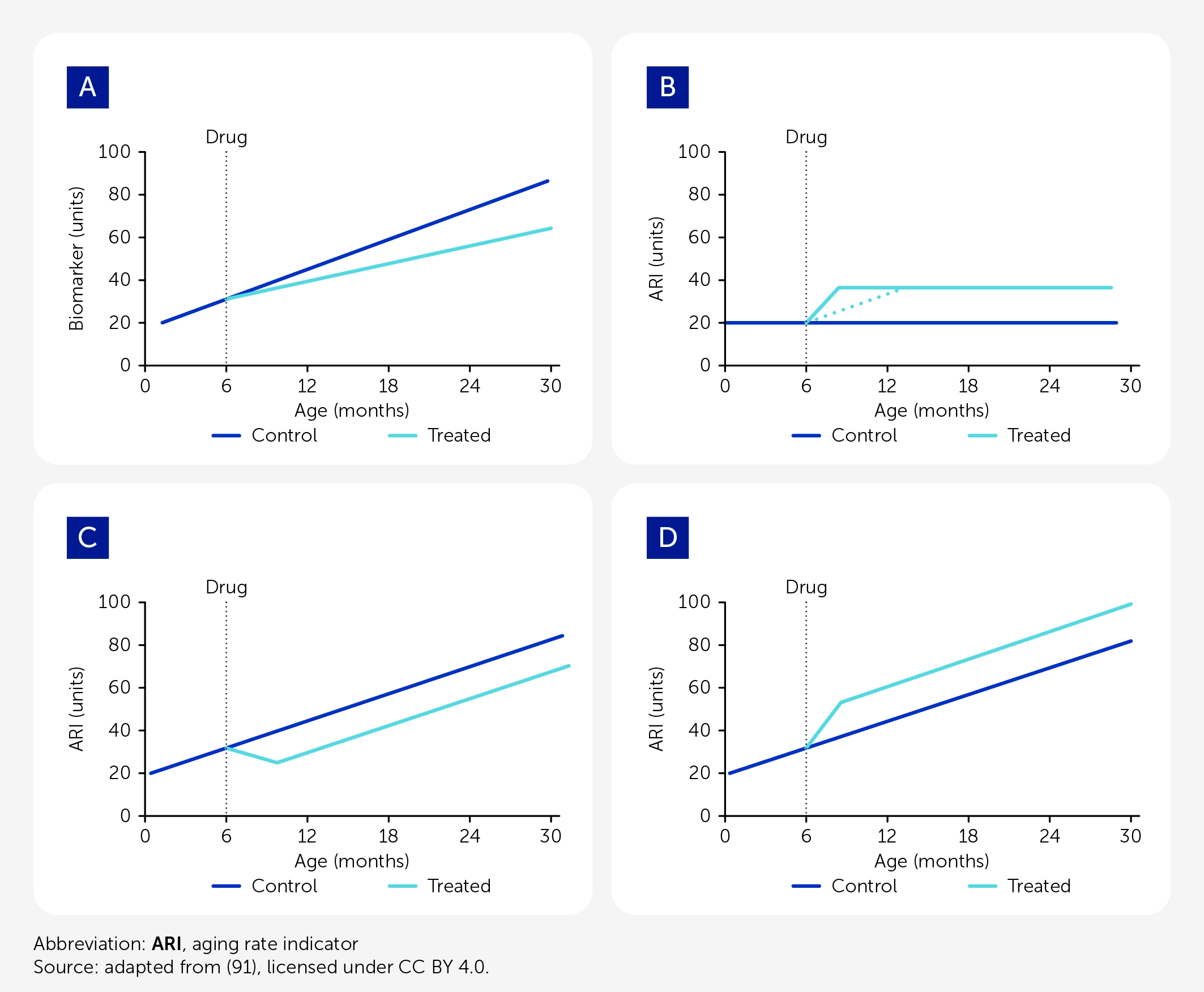
A biological-age clock is an odometer: how far you have aged. An aging rate indicator, or ARI, would be a speedometer: how fast you are aging now. Austad, Kaeberlein and Miller went looking for one in the mice that live longest in the NIA’s Interventions Testing Program (ITP), where eight drugs, including rapamycin, acarbose and canagliflozin, extend lifespan by 12 percent or more. Twelve shifts kept showing up across those mice, from lower mTORC1 activity to higher UCP1 in fat. If the same shifts can be read from one midlife blood draw, a drug’s effect on aging could be judged in months. A clock needs two timepoints to say the same thing.
For longevitydocs: Useful language for the next patient with an Apple Health Age. That number is an odometer, not a speedometer, and we prescribe against neither. ARIs are mouse data with no human panel yet. The real argument in the paper is that these drugs work when started in midlife, which supports late-start trials, not off-label rapamycin.
REM sleep tracks lower risk across 83 diseases in 95,559 UK Biobank adults
Luo et al., PLOS Medicine, Sept 17, 2026
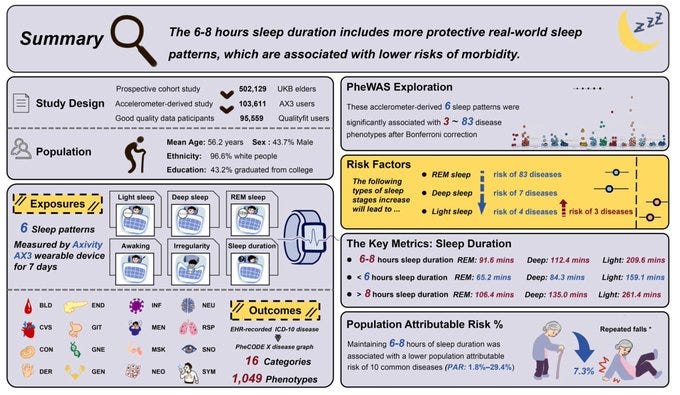
Nearly 96,000 UK adults wore a wrist tracker for a week, and researchers followed their health records for about nine years, checking against more than a thousand diagnoses. People who got more REM sleep were less likely to develop 83 conditions, including heart failure (26 percent lower risk), atrial fibrillation (17 percent lower) and dementia (46 percent lower). More deep sleep went with less type 2 diabetes and depression. Broken and irregular sleep went with more anxiety, depression and substance dependence. Total sleep followed a U-curve: 6 to 8 hours was the low-risk zone for most conditions, and sleeping under 5 hours accounted for 37 of the 41 links to higher risk.
For longevitydocs: We already knew sleep cuts morbidity. We now know how to measure it at scale, and this study shows the pieces that matter: more REM, more deep sleep, less time awake after falling asleep. The open question is how do you get more REM and deep sleep, and less WASO? The honest answer is that we have very little trial evidence for moving any of the three on purpose, and a tracker cannot measure them well enough to know if you did. What holds up is simpler. Duration and regularity are the levers we can pull, and both moved the rest in this cohort.
Regular exercise rewires immune cells at the chromatin level
Song et al., Science Advances, Sept 18, 2026.
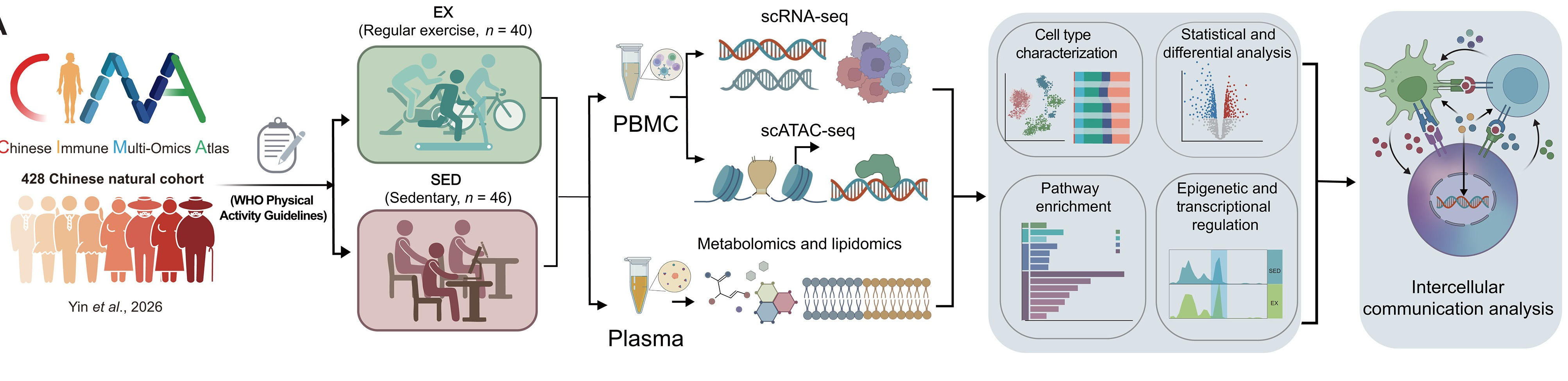
We know exercise protects against metabolic disease and infection. This paper asks what it does to the blood. A team at BGI Research in Shenzhen compared 40 adults exercising at the WHO threshold with 46 sedentary controls, all in their late twenties, and read their plasma and 1.3 million immune cells down to the chromatin. Exercisers had the familiar labs, lower glucose and triglycerides, higher HDL, and underneath, a plasma signature of fat burning and antioxidant defense. Their monocytes and B cells had antigen-presentation genes more open and more active. Killer T and NK cells were primed, with the inflammatory switches AP-1 and NF-κB turned down. Cell-to-cell signaling shifted from resistin and IL-6 toward antigen presentation and interferon-γ.
For longevitydocs: The mechanism under the advice we already give: exercise sharpens immune surveillance and quiets inflammation, and each effect now has an address in the genome. A snapshot of young, self-reported exercisers, so it explains rather than proves. The finding to watch is resistin, a monocyte signal that acts on the vascular wall. Exercise turned it down.

Lexicon
Interleukin-6 (IL-6)
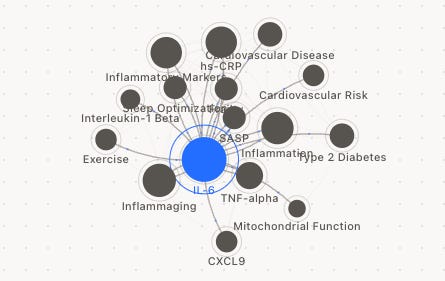
Interleukin-6 (IL-6) is a cytokine that is elevated in chronic low-grade systemic inflammation, which is associated with cardiovascular disease and type 2 diabetes. IL-6 was the first cytokine described as a myokine, produced and released by contracting skeletal muscle fibers during exercise and exerting effects in other organs. Robust epidemiologic evidence, together with human genetic studies and mechanistic experiments, supports IL-6 as a central mediator of cardiovascular risk.
Certification Highlight
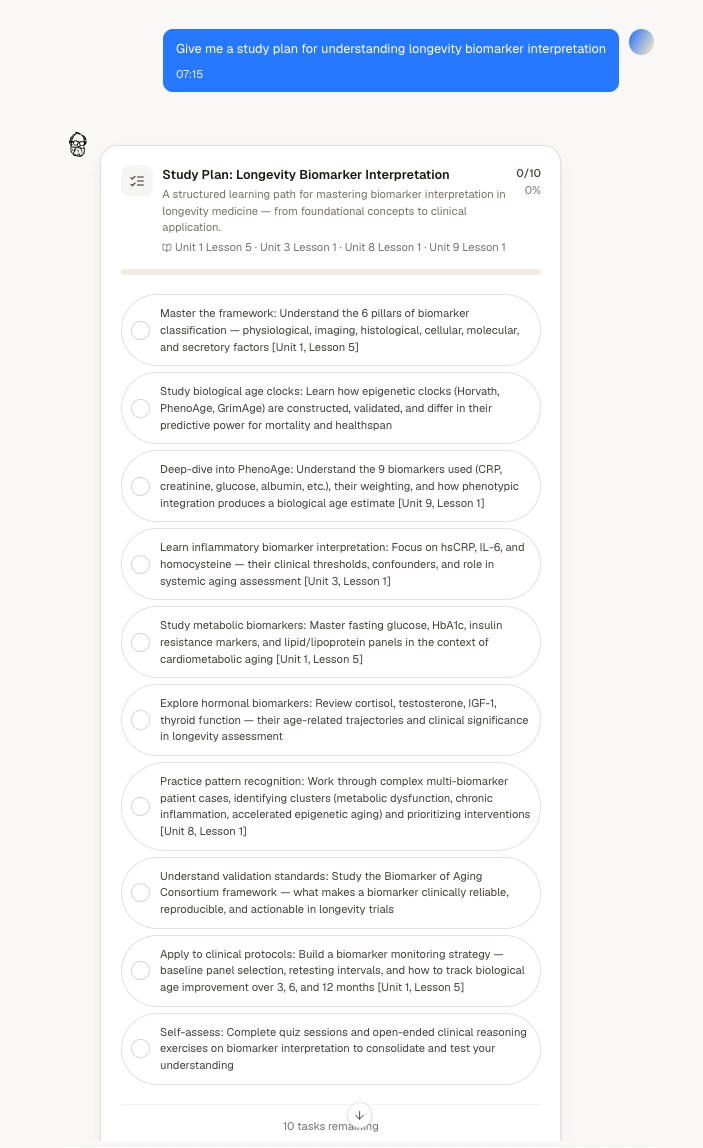
Understanding longevity biomarker interpretation

Buzz in the chat
Is TPE Safe?
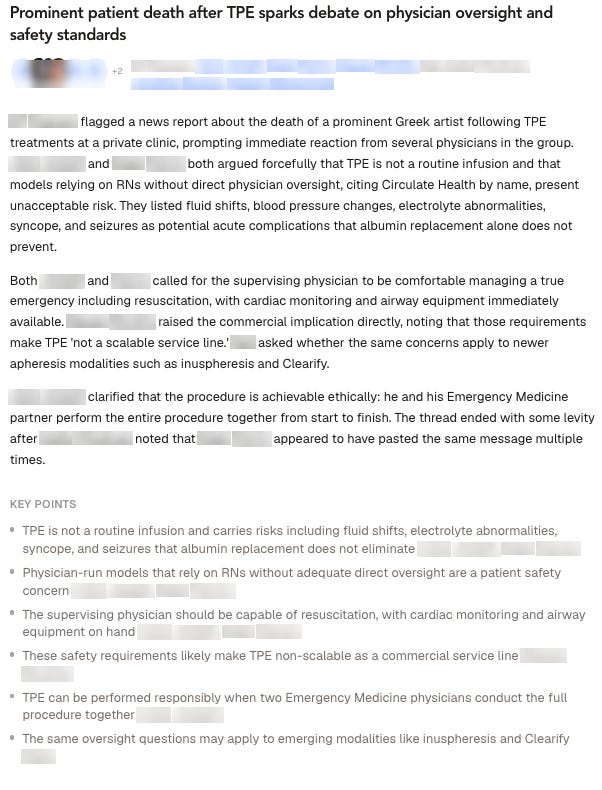
Every week we turn the best conversations in the network into a Case you can read in five minutes. Each one gives you the summary, the key points with the physicians who made them, and the full thread underneath. Read it, add your comment, or jump straight into the conversation.
Apply for membership (physicians only)
Member profile
Angella Koncarevic, MD, CLD
Calendar
Upcoming Events
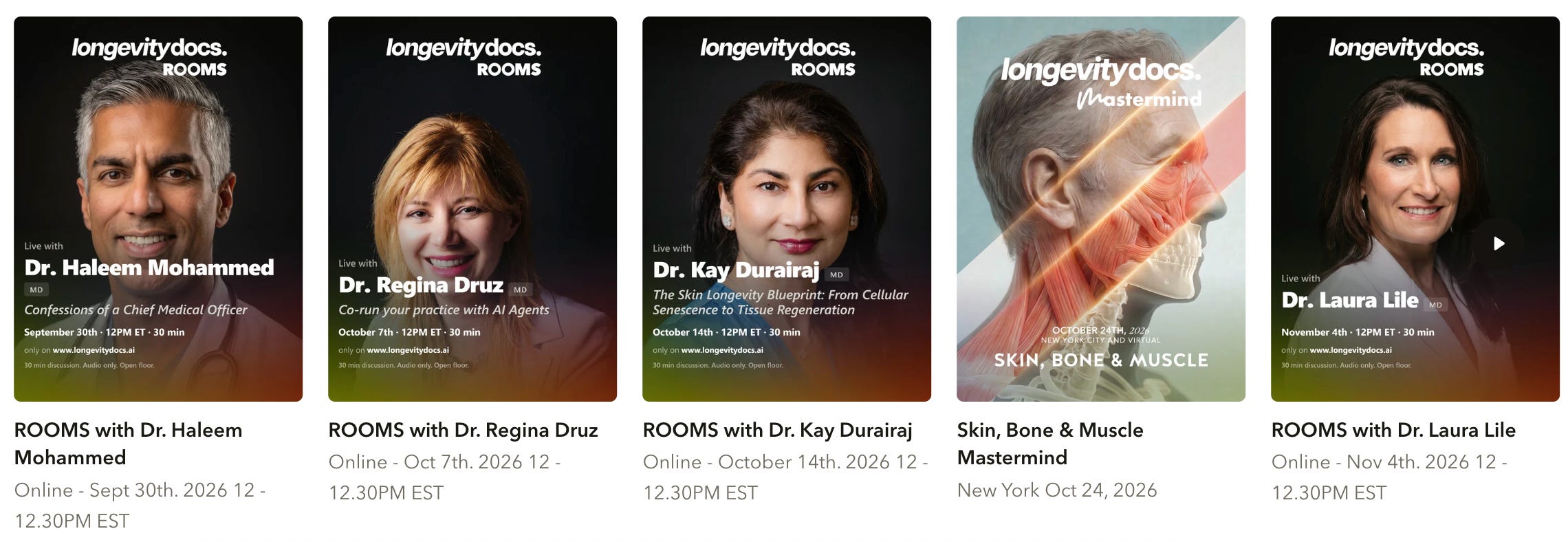
Confessions of a Chief Medical Officer - Dr. Haleem Mohammed
Rooms, Sept 30, 12.00 - 12.30 pm ET
Co-run your practice with AI agents - Dr. Regina Druz
Rooms, Oct 7, 12.00 - 12.30 pm ET
Skin Longevity Blueprint - Dr. Kay Durairaj
Rooms, Oct 14, 12.00 - 12.30 pm ET
Skin, Bone and Muscle Mastermind
New York and virtual, Oct 24
Dr. Laura Lile
Rooms, Nov 4, 12.00 - 12.30 pm ET

Guidelines
Ferritin below 30 is the new line
The 2026 American Society of Hematology guidelines in Blood Advances keep ferritin as the best first test. They move the adult low cutoff from below 15 to below 30. Below 50 may guide treatment around surgery, blood loss or pregnancy planning. With inflammation, the guidelines add a full iron panel, where TSAT below 20 percent is significant.
For longevitydocs: Women's health and midlife panels will feel this first. A fair number of ferritin results filed as normal last year would now read differently. It seems worth a look back through recent results.
Pharma
FDA opens the file on testosterone for menopause
On Sept 17, FDA’s Office of Women’s Health and Center for Drug Evaluation and Research (CDER) held a public workshop on testosterone use in menopausal women: benefits, dosing, lab interpretation and long-term safety, with the stated aim of informing research and drug development. There is still no FDA-approved testosterone indication or formulation for menopausal women, so prescribing runs on off-label male products or compounding. The evidence is strongest for hypoactive sexual desire disorder (HSDD); energy, mood and cognition are what patients ask about, without a guideline-backed indication behind them. Long-term cardiovascular and breast cancer data remain the regulatory bottleneck.
For longevitydocs: This is the first time FDA has put the question on its own agenda, and a female-dose NDA path is now imaginable. For practices already prescribing off-label, the documented indication (usually HSDD), consent, assay choice and monitoring are what will read well if the regulatory picture sharpens.
Policy
Bill Targets Corporate Control of Doctors

The Stop Corporate Takeovers of Physicians Act, introduced Sept 16 by Senators Warren, Wyden and Merkley, would bar private equity, insurers and other non-physician-controlled businesses from owning or directing medical practices. It closes the two standard workarounds: the friendly physician who owns the practice on paper, and the management services organization that runs hiring, schedules, pay, billing and pricing behind it. Hospitals and nonprofits are exempt. Med spas and telehealth platforms built on a medical director plus MSO are not. The bill is modeled on Oregon's 2025 law, and its sponsors cite more than 80 percent of U.S. doctors now employed by corporate entities, up from 62 percent in 2019.
For longevitydocs: PE-owned and VC-backed MSOs, and the med spas and telehealth platforms built on them, would be inside the bill's definition. Federal passage is unlikely this session, but the Oregon template is spreading state by state. A good moment to reread your own agreement and ask who actually controls hiring, schedules and billing.
Media
Deepfake doctors are selling pills
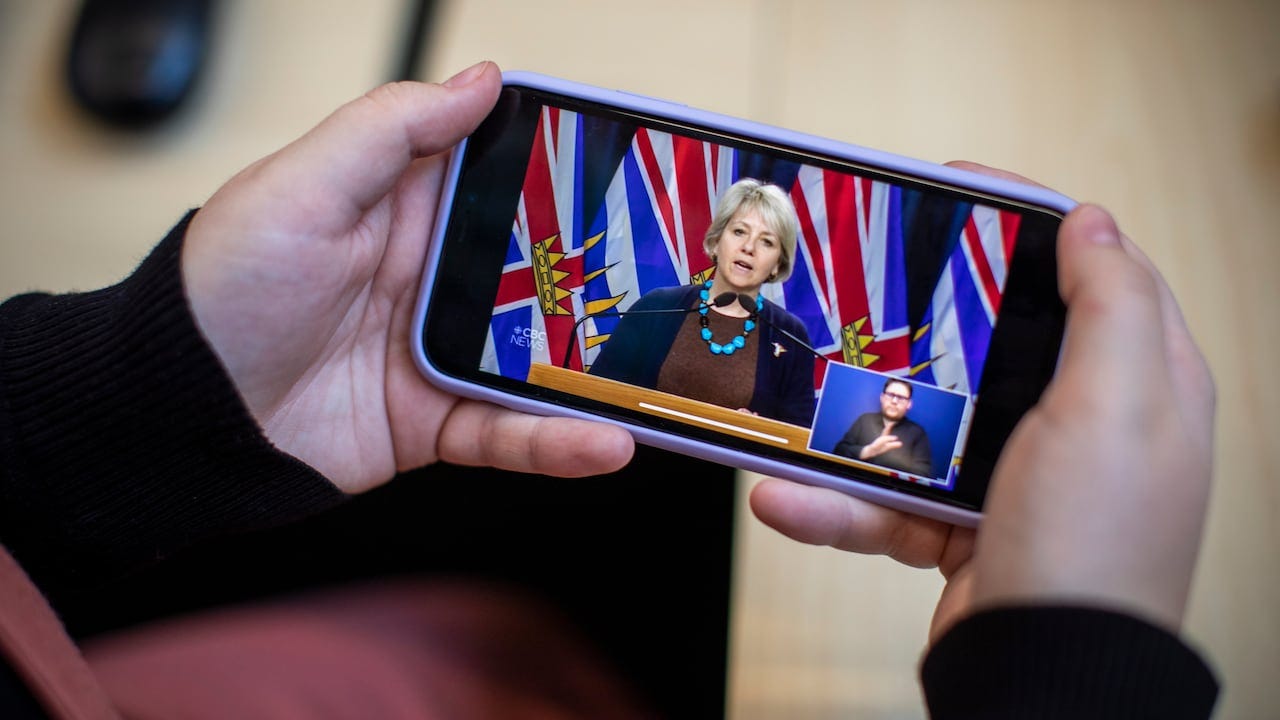
CBC reports that AI-generated ads using the faces and voices of prominent Canadian physicians are circulating on Facebook and TikTok, selling prostate treatments, joint pills and “$1 million satisfaction guarantees.” Dr. Bonnie Henry, British Columbia’s provincial health officer, and Dr. François Marquis, chief of intensive care at Maisonneuve-Rosemont in Montreal, have both been cloned repeatedly; one victim came to Marquis’s ICU asking for a refund on pills that never arrived. Cease-and-desist letters, platform reports, the medical college and the police have all led nowhere. A 2024 BMJ report describes the same pattern in the UK, and the US NO FAKES Act is still a bill.
For longevitydocs: If you have a public face, assume it is already in a training set. The practical steps are small: a verified profile patients can check, a line on your site saying you sell nothing through social ads, and a saved search on your own name once a month. The larger point is the one behind this week’s cover. Patients cannot tell a physician from a rendering of one, and the platforms will not do it for them.

Every doctor should be a longevity doctor
longevitydocs.™ is the intelligence network for longevity medicine. 1,000+ physicians, 68 countries
Editorial Disclaimer: