


ISSUE #113 · NOVEMBER 1, 2026

Hey Doc,
AI coaches, peptide platforms and at-home testing are scaling fast, and becoming commodities. Patients will go looking for what none of them can scale: judgment, taste, compassion and wisdom. In the age of AI, the most valuable asset will be human intelligence: yours, and that of the colleagues you trust with a hard case.
So at longevitydocs™, we decided to build smaller, closer and stronger. This week we open the Club: 100 seats for the 2026 cohort, and our first Caribbean Retreat in March. You will find it under What’s New.
We lead with part one of a three-part series on the business of longevity clinics: what should a longevity to charge.
Dr. David Luu, Founder, longevitydocs™
P.S. We all want to live longer to enjoy our grandchildren. We decided not to wait: yesterday was our yearly Halloween in New York with our son, makeup by ourselves ;)


THE BUSINESS OF LONGEVITY CLINICS · PART 1 OF 3
What should a longevity doctor charge?
Longevity medicine is now sold online and in high-end clinics, from AI-reported biomarkers to a full team of physicians. Superpower’s testing membership, 100+ biomarkers with an app and a care team, starts at $199 a year (more in New York and New Jersey). Most longevity clinics charge between $5,000 and $60,000 a year for a membership. Fountain Life lists tiers at $10,500, $21,500 and $85,000 in New York. Bryan Johnson’s Immortals opened in February at $1 million a year, with three spots.
It is priced like any other consumer good or service. A bus and a luxury car both get you across town. A motel and a five-star palace both give you a bed. What people pay for is the experience, the outcomes, and the features and benefits around them.
For a physician, the math works differently. No physician can price at either end. At $199, the reason is business: the fee does not cover an hour of your time. At $1 million, the reason is ethics: three patients carry your whole practice, and your clinical judgment comes under pressure to serve what they paid for rather than what they need.
Your fee starts from your time. The average physician works five days a week, about 10 hours a day: roughly 2,300 hours over 46 working weeks. About a third goes to paperwork and administration, which leaves around 1,600 clinical hours. Plan to fill about 70% of them, roughly 1,000 to 1,200 hours, so you keep room for new members, sick visits and your own life.
Physicians in the network learned how much of that time disappears behind each visit.
“If we have a 30 minute phone call to discuss test results, I have spent at least twice that in digesting the data and reviewing my recommendations and plan.” (Dr. Julie Doyle)
Dr. Steven Murphy says the same about longevity plans: you will build them “2 to 4 times a year in addition to the traditional medical care you provide.”
Setting a fee takes 20 steps, and we put all of them on a one-page checklist. This week, start with the first four: your numbers.
The numbers below are hypothetical. About half of our readers practice in the US, most of them in California, New York, Florida, Texas and New Jersey, so the example uses a major US metro. Adapt it to your region and to the life you want: work less, work more, grow the practice or plan your retirement.
1. Set your target compensation
Start from what you earn today. The US physician average is about $386,000 a year (Medscape, 2026): around $288,000 in family medicine, $307,000 in internal medicine, and much more in surgery. If you are moving from surgery or primary care into a cash-pay practice, add a premium of about 20% for the risk you take on. That is your target annual gross income. In the examples below, the average plus 20% comes to about $460,000.
2. Choose your delivery model
The model sets your overhead, and overhead sets your price floor.
Virtual: $1,800 to $6,000 a year, 200 to 400 members per physician, about $175K of overhead. You need a license in every state where a member sits.
Primary care with a longevity layer: direct primary care averages $98.46 a month. Since January, a DPC fee up to $150 a month can be paid from an HSA, so a primary care base plus a separately priced longevity tier now works.
Concierge: a median fee near $3,200, with panels of 300 to 600. A longevity-focused concierge practice in New York hiring this year caps panels at 150 members paying $18,000.
Brick and mortar: $6,000 to $25,000 a year, 50 to 200 members, $350K to $450K of overhead.
3. List your fixed overhead, line by line
In a major metro like Los Angeles, New York or Miami, a solo clinic runs about $457,000 a year: rent for about 1,200 sq ft ($80,000), a registered nurse ($115,000), a care coordinator ($70,000), payroll taxes and benefits ($37,000), EMR, AI scribe and app ($30,000), malpractice ($30,000), marketing ($40,000), legal, accounting and compliance ($30,000), and equipment and supplies ($25,000). In a mid-cost city the same clinic runs closer to $380,000, and a virtual practice closer to $175,000.
4. Itemize your variable cost per member
Count everything that comes with each membership: every lab draw, scan, CGM sensor and supplement in the fee. In our examples it runs from $800 a member at a $3,000 fee to $6,000 at $25,000.
Be careful with testing. It is the easiest thing to sell and the cheapest to deliver, and patients can buy a 100+ biomarker panel online for $199. Dr. Paul Alexandrov took it out of his CLRBODY membership: “we sell physician-led care, judgment, and ongoing personal guidance.” Keep only the tests that each change a decision.
Dr. Neil Paulvin hears it in the exam room: patients quote the price of Function and Neko back to him. Dr. Amir Saeed prices the testing in his tiers at wholesale cost, so the fee pays for physician management and ongoing care. Dr. Amy Garza found that offering too many services took time from “digging deeper on the problem at hand.” Dr. Regina Druz unbundled testing the same way and found the practice simpler to run.
Put your numbers together
Members needed = (compensation + overhead) ÷ (fee − variable cost per member)
With $460,000 of compensation and $457,000 of overhead:
$3,000 a year: 417 members, 3 physician hours each
$6,000: 204 members, 6 hours each
$10,000: 123 members, 10 hours each
$18,000: 66 members, 16 hours each
$25,000: 49 members, 20 hours each
For most physicians opening solo, the reachable zone sits between the $6,000 and $10,000 lines: 123 to 204 members. Both pay $460,000 and fit a real week.
Outside the US. The other half of our readers practice in 133 countries, led by the UK, India, Canada and Germany. Run the same four steps with local numbers: physician pay in your country and specialty for step 1, local rent, salaries and indemnity for step 3, and in-country lab and imaging prices for step 4. Where patients already pay for a public system, as in the UK, Canada and much of Europe, a private longevity layer next to public care is usually the easiest place to start.
And when the numbers say your fee is too low, raise it. Dr. Catherine Johnson sees the cost of waiting: as demand grows, holding legacy prices down becomes an opportunity cost. Physicians in the network who raised lost fewer members than they feared.
“My practice is about 1.5 years old and I’ve now adjusted my price/model 3 times. Every time I have increased my price I’ve expected significant drop off and not a single person has dropped.” (Dr. Jordan Emont)
Then work through steps 5 to 20: how many hours each member really takes, your four prices, how to bill, what to put in the member agreement, and when to raise. All 20 steps are on one page, with a note for physicians who charge per consultation.

Want a second opinion on your numbers? Club members bring questions like this to weekly rounds, with peers who have already priced their own practice. The 2026 cohort of 100 physicians opens this week. Apply to the Club →
Next Sunday, part 2: what it costs to open a longevity clinic. Reply to this email with what opening your practice cost, and what you would not buy again.

LAUNCH · THE LONGEVITYDOCS™ CLUB
The longevitydocs™ Club is open

In 2023, longevitydocs™ started as a WhatsApp group of few physicians. Today the network counts more than 1,000+ physicians in 68 countries. As it grew, many of you asked me for something smaller: a room of peers you trust, where you can bring a real case and get a straight answer.
That request makes more sense every month. AI is becoming a commodity, and soon every physician will work with the same models. What no model can give you is a colleague you have met in person: someone to learn from, mentor, build with and grow alongside, and whose company you enjoy.
We built that room. The Club opens this week for a 2026 cohort of 100 physicians.
Belonging comes first. You are not alone in this. In the Club you build alongside like-minded physicians who understand what you are trying to do, and who see the same future: longevity medicine as the new standard of care.
Membership also includes:
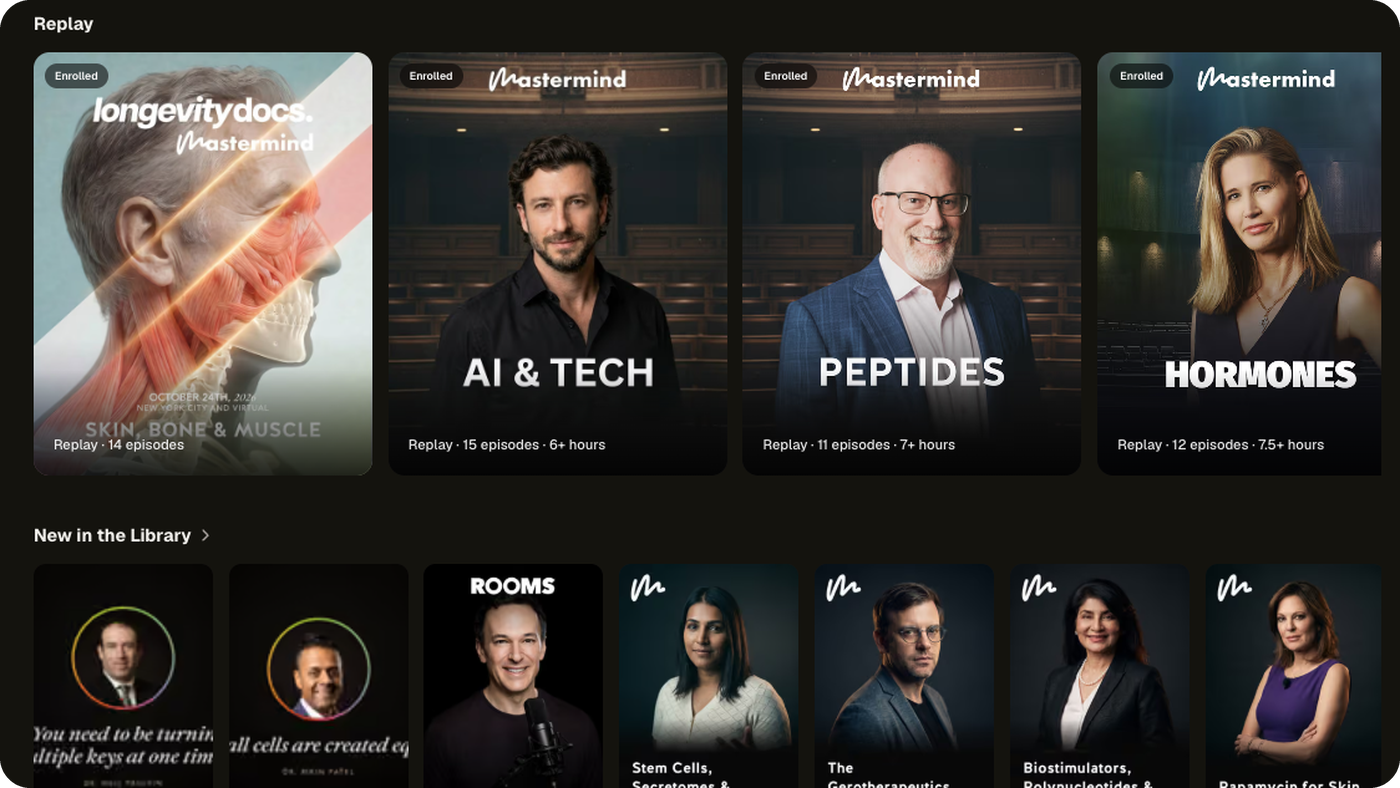
Full access to our streaming library. Think of it as the Netflix of longevity medicine: every Room with audio replays, every Expert Class with transcripts, and the Mastermind and Summit sessions, on demand.
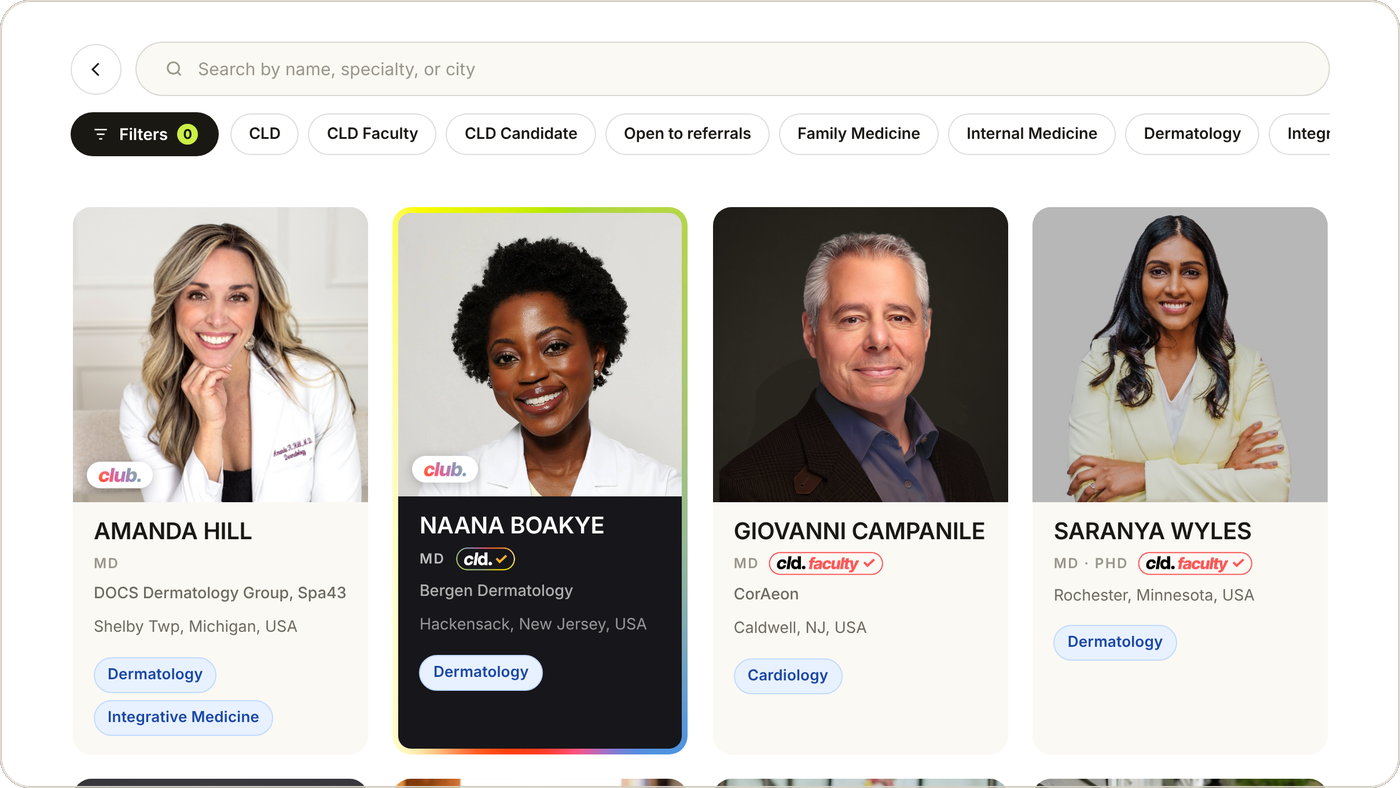
A verified profile in the directory. Your listing gets its own public URL and shows up when patients and colleagues search by name, specialty, city or country. Say what you are open to: consulting, speaking or research.

Unlimited Ask Hippo™. Go deeper into your longevity practice. Hippo answers from the CLD curriculum, the Longevity Lexicon, the literature and what your peers have observed, with every source cited. Ask a clinical question and see the data behind the answer, like this chart of STEP-1 against SURMOUNT-1, then turn it into flashcards or a quiz.
And everything else:
Your peers. Club-only chat channels, quarterly virtual roundtables, a journal club with the authors, and weekly clinical Rounds on members’ hardest cases (starting soon).
Resources. The full Longevity Lexicon, fact sheets, checklists and frameworks, the full daily longevitydocs™ News brief, and posting rights on the jobs board.
In person. Early access and 20% off Mastermind, Summit and Awards tickets, early access to Tables by invitation, and access to the Caribbean Retreat below.
The Club is also where mentors and mentees find each other. Some of the physicians who sat at the back of our first Mastermind now teach on our stage. I want every member to have someone to call, and to be that call for someone else.
The Caribbean Retreat: March 4 to 7, 2027, St. Maarten

A few years ago I promised you a retreat. It is set: March 4 to 7, 2027, three nights by the sea in St. Maarten, for professional and personal growth. The Retreat is an add-on open only to Club members, limited to 30 to 40 physicians. You fly home rested, with new ideas and people to call about them, while New York is still in winter.
The Club is $2,500 a year, for physicians only (MD, DO or MBBS). The 2026 cohort is limited to 100 members.

RESEARCH · AI IN MEDICINE
Google’s multi-agent health assistant outscored simpler designs in user tests

A Google prototype splits health questions across a data science agent, a medical expert agent and a coach, working from the wearable and blood test data of 1,165 people. Users picked it first 46.7% of the time, against 24.4% for a single-agent design. Clinical raters judged 2% of its medical summaries to carry moderate to severe potential harm. It measured how the conversations seemed, not health outcomes (Nature).
RESEARCH · CARDIOVASCULAR
Statin users’ coronary plaque shifted toward denser calcium over 3 years
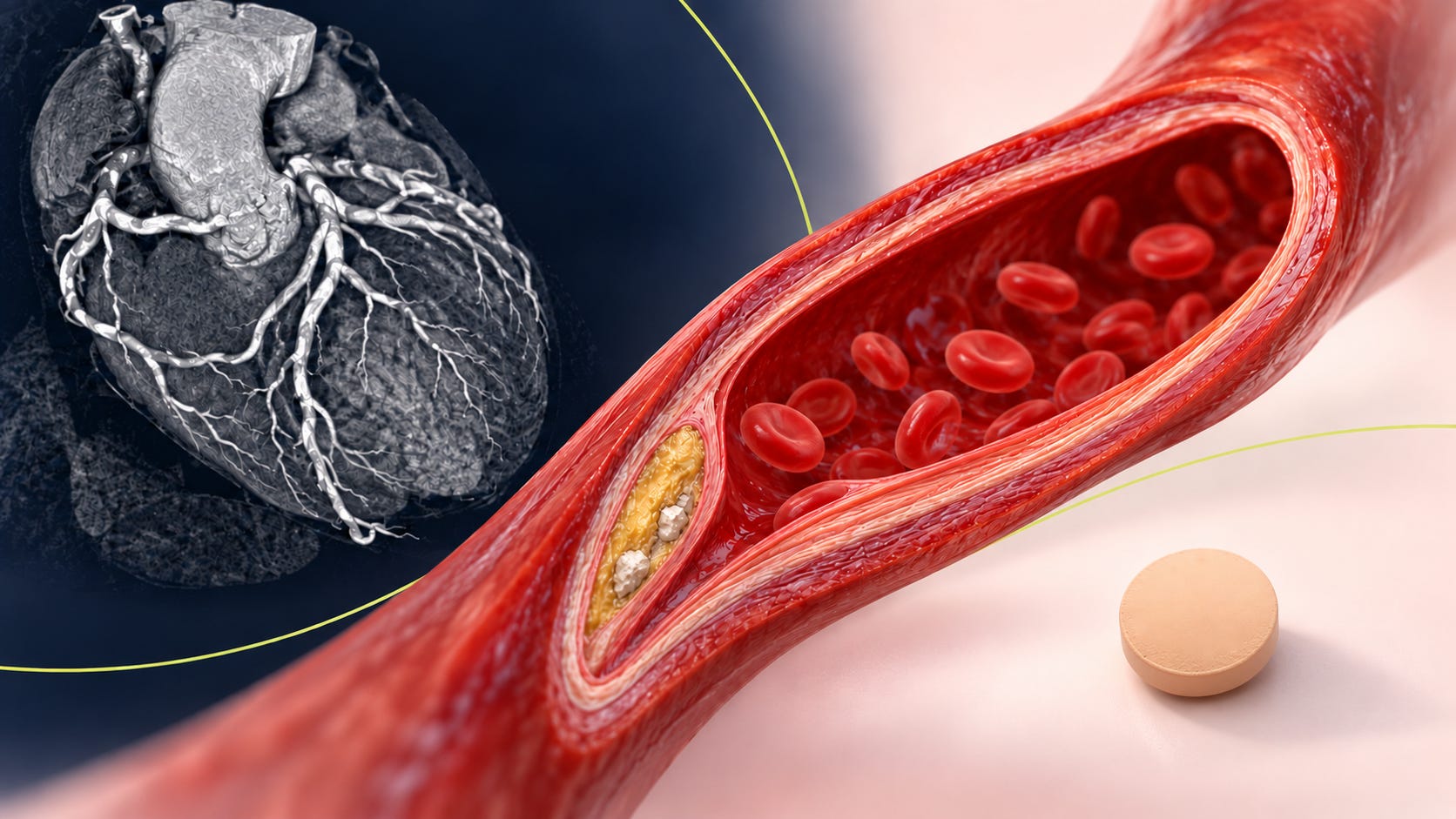
In a post hoc analysis of the CAUGHT-CAD trial, 338 statin-naive adults with a family history of early coronary disease had serial CT angiography over 3 years. On a statin, soft noncalcified plaque shrank and calcium shifted toward higher density, while total calcium volume matched untreated plaques. That supports plaque passivation when a calcium score rises on treatment. Statin use was not randomized in this comparison (JACC: Cardiovascular Imaging).
RESEARCH · CELLULAR REPROGRAMMING
Neural stem cells from aged donors’ blood lost most epigenetic age

Blood progenitors from 15 donors aged 0 to 101, converted directly into neural stem cells, kept about 13% of their donor’s epigenetic age early in culture and 5% later. The reset took about 50 days, slower than reprogramming to iPSCs. It happened in a dish and the cells became a different cell type, so nobody was made younger. The interest is in cell therapy (Aging Cell).
RESEARCH · AI IN MEDICINE
AI plans cost 3.2 times physicians’ care across 200 clinic notes
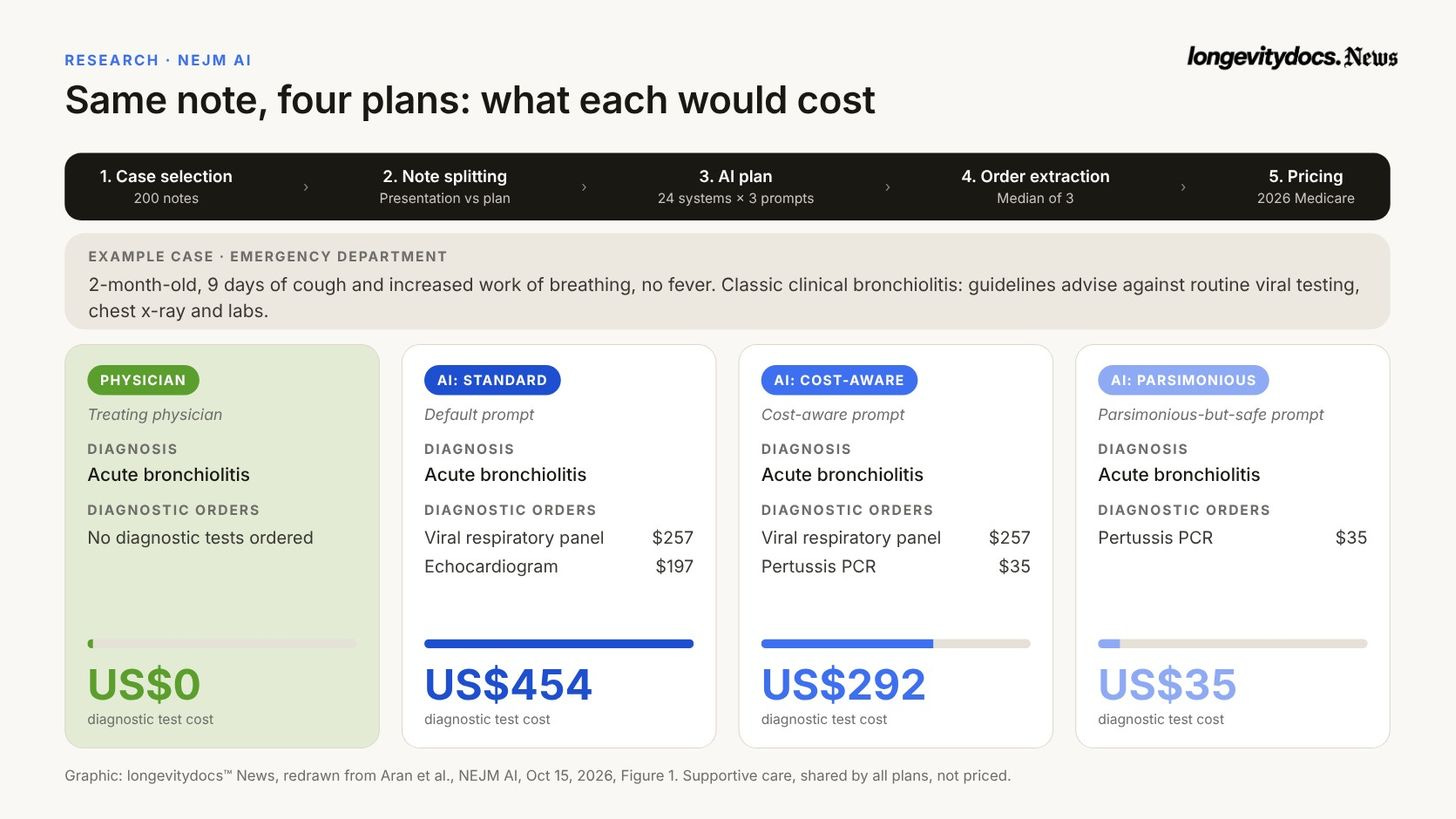
Twenty-four language models wrote plans for 200 real outpatient and emergency notes. Priced at Medicare rates, their tests and referrals averaged US$314 a visit, against US$97 for the treating physicians. At the 66% of visits where physicians ordered no tests, every model ordered some. A cost-aware prompt narrowed the gap without closing it (NEJM AI).

CERTIFICATION
How longevity practices escape the time-for-money trap
This week’s pricing story comes from a lesson in the Certified Longevity Doctor program: Financial Architecture and Revenue Optimization. In fee-for-service medicine, revenue is capped at time x reimbursement rate. The lesson shows how longevity practices build revenue that does not depend only on physician hours.
Recurring membership first. Annual, tiered memberships fund extended visits, biomarker tracking and care between visits. Recurring revenue gives predictable cash flow and raises what the practice is worth.
Retention is the profit lever. Lifetime value = annual revenue per member x years retained − acquisition cost. Members stay for the relationship, their data over time, visible results and a sense of community. They leave when they stop thinking about the practice between visits.
Hybrid coding, done by the book. In hybrid practices, E/M, CCM, RPM and RTM codes can fund non-visit care. Never bill insurance and charge the membership for the same service, and have a compliance expert review the model.
Ancillary revenue. Advanced diagnostics, coaching and selected services can add margin without adding physician hours, when they serve the care plan.
Target economics. Net margins of 30 to 40%, 2 to 3 support staff per physician, and revenue per patient that depends on the model and tier.
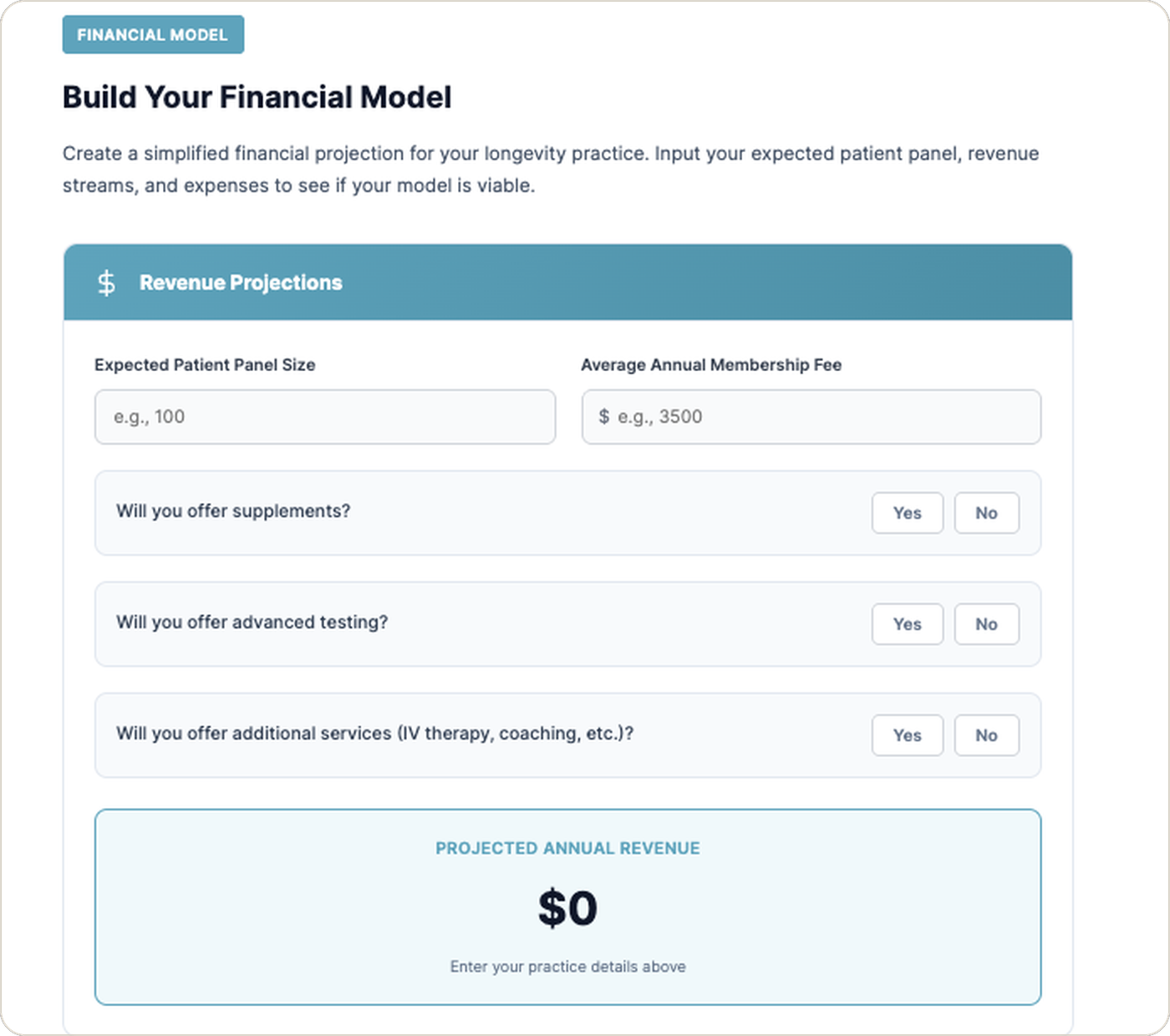
Build your own model. In the lesson, you enter your panel, your fee and your costs, and see whether the practice works before you sign a lease. It is one of the tools inside the Certified Longevity Doctor program.
LEXICON
VO2 Max
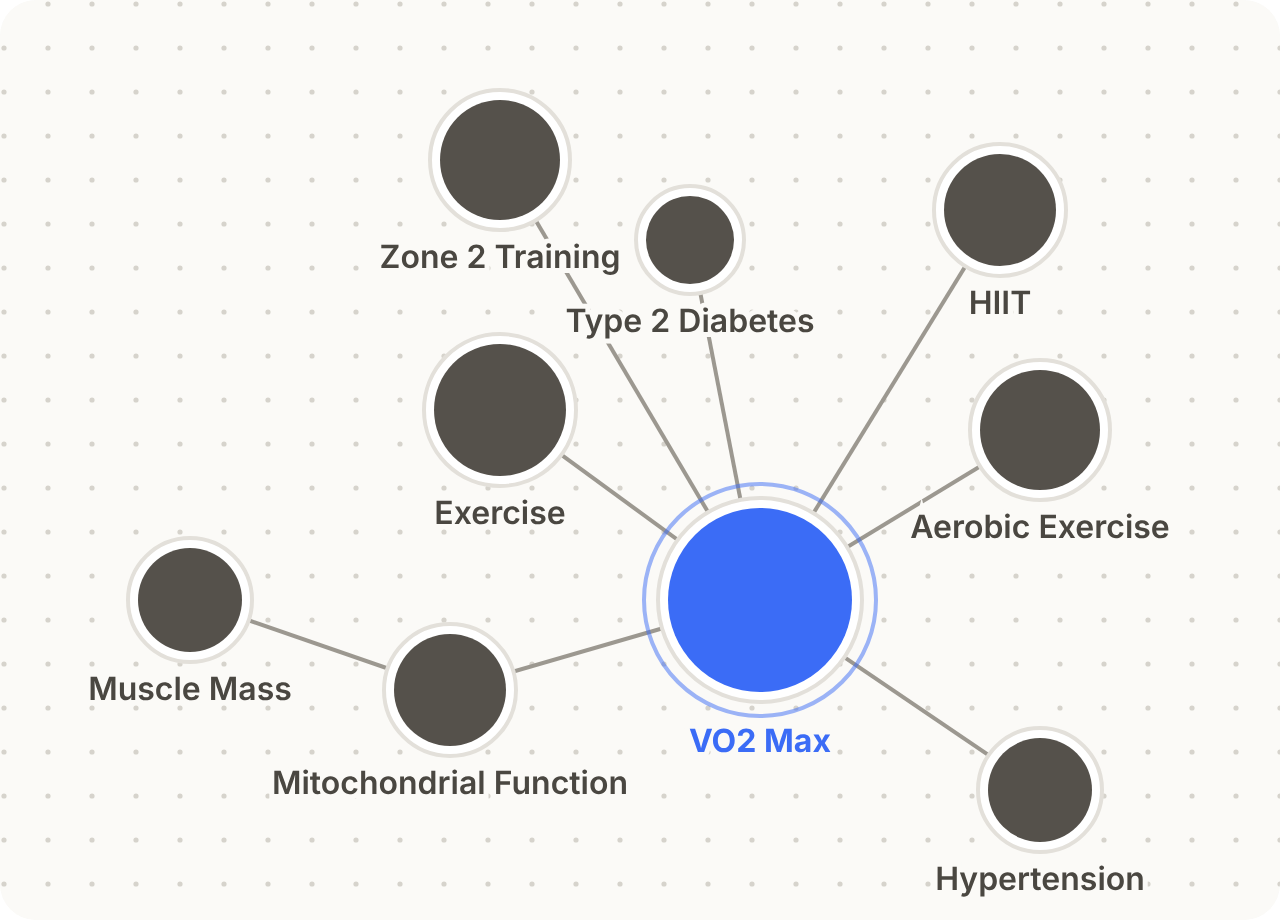
Maximum oxygen uptake (VO2max), measured during large muscle mass exercise such as cycling or running, “is widely considered to be the gold standard measurement of integrated cardiopulmonary-muscle oxidative function.” It “has been shown to be a strong and independent predictor of all-cause and disease-specific mortality.” This week’s Buzz in the Chat asks how far a wearable estimate can be trusted.

BUZZ IN THE CHAT
Can a ring estimate VO2 max? Physicians weigh wearables against CPET
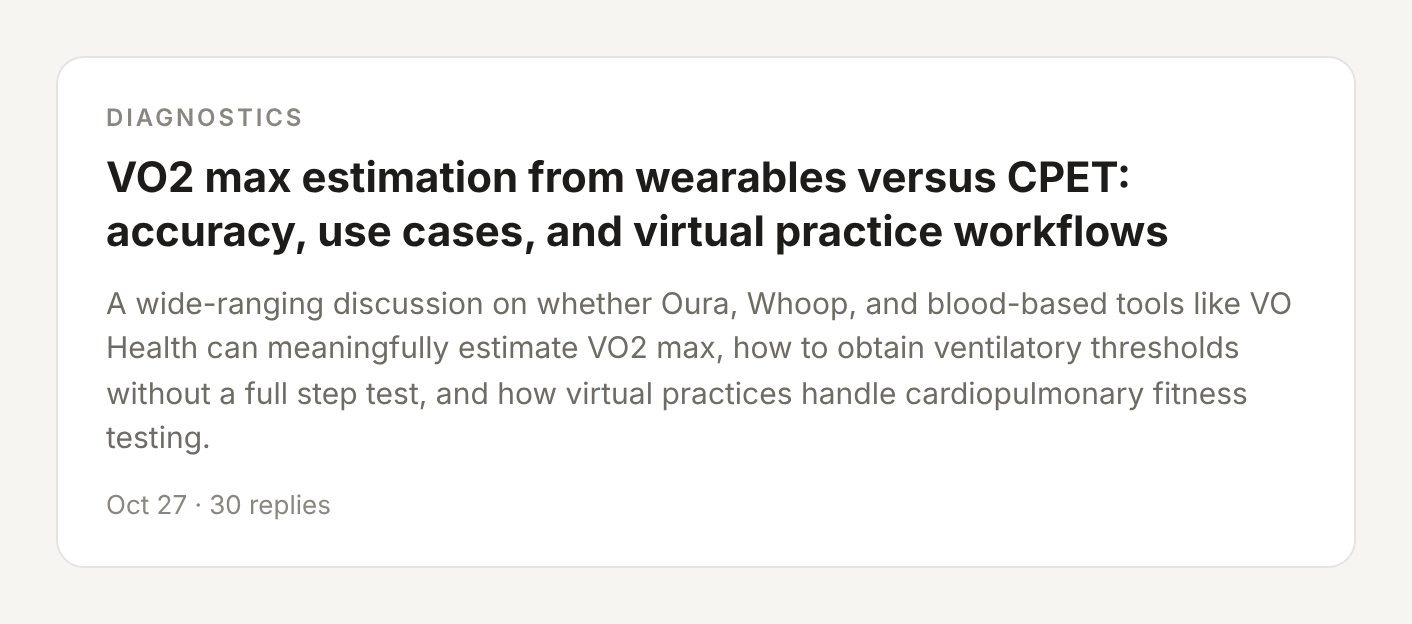
A member asked whether Oura’s new VO2 max estimate can be trusted. One physician explained how every wearable gets there: the oxygen cost of movement is well established, so heart rate and body weight give an estimate. Without speed data and an accurate weight, the error adds up, and heart rate at the wrist is the weak link. Whoop reads workout heart rate better on the upper arm.
Another member prefers Whoop because it lets you enter a baseline CPET as the reference point. In clinic, they run a single maximal CPET on a ramp protocol and add lactate thresholds, since VCO2 is half the equation. The largest gain they have seen from baseline is 20 to 30%, which is why they test before starting a structured program.
Most agreed on how to read the numbers: a large change over time is probably real, and there is little to say clinically between a 50 and a 55. Everyone should still be training. For virtual practices, one physician refers patients to DexaFit locations around New York, and another uses a six-minute walk test. Two members are trying VO Health’s blood-based estimate and plan to compare it with a PNOE test.
One member added a clinical warning: a cardiologist colleague has seen several unexplained drops in VO2 max that led to new cancer diagnoses.
Apply for membership (physicians only)
LONGEVITY DOCTOR OF THE WEEK
Dr. Stefanos Demertzis - Lugano, Switzerland
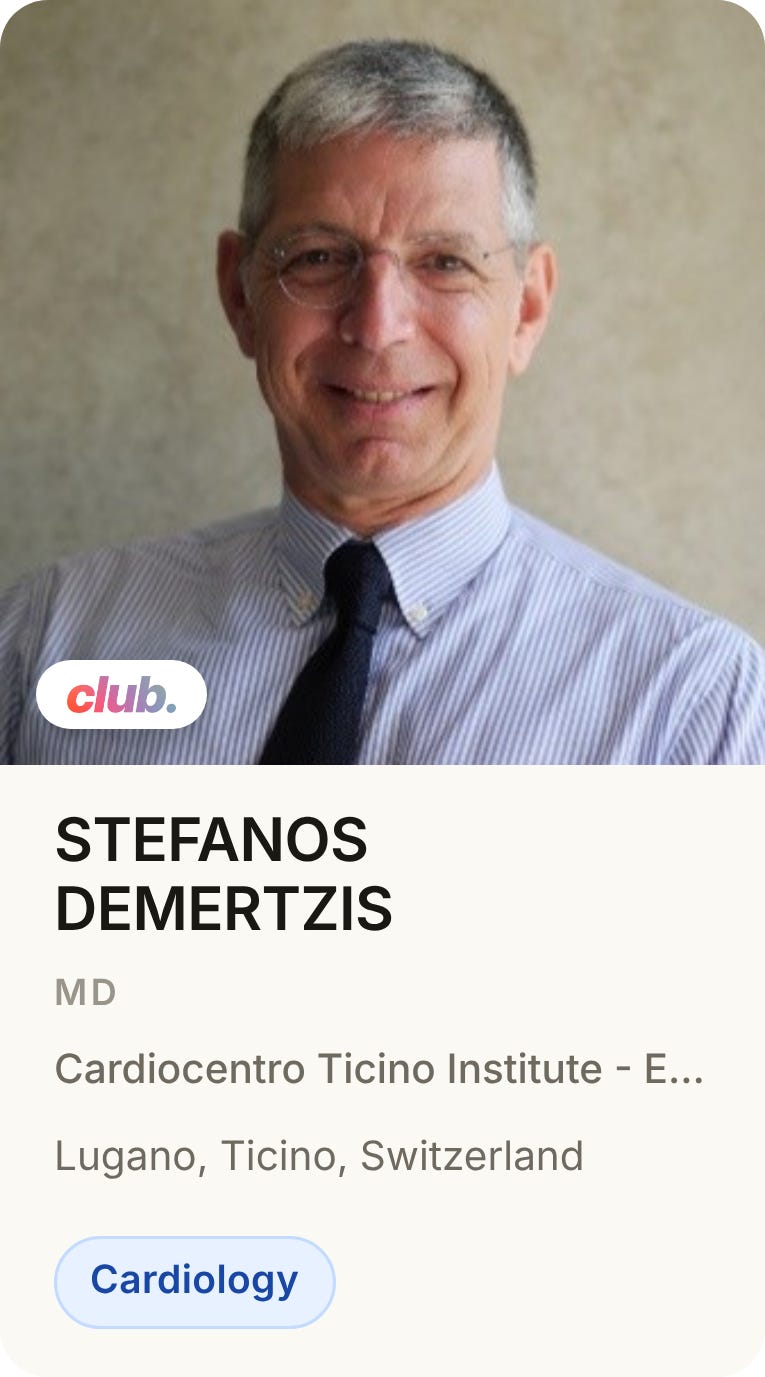
Stefanos Demertzis, MD, is Head of Cardiac Surgery at the Cardiocentro Ticino Institute (EOC) in Lugano, Switzerland, with more than 3,000 open heart operations. His expertise is minimally invasive cardiac and aortic surgery, and he is certified in diving and hyperbaric medicine. He is adjunct professor at the Università della Svizzera Italiana, associate professor at the University of Bern, and a Harvard Medical School-associated clinical research scholar. A CLD candidate, he brings that background to healthy longevity and writes about heart health at heartmatters.ch.
CALENDAR
longevitydocs™ Events

Nov 11 · Rooms with Dr. Jessica Shepherd
Online, 12 to 12:30 PM ET. Join
Nov 18 · Rooms with Dr. Abid Husain
Online, 12 to 12:30 PM ET. Join
Dec 2 · Rooms with Dr. Hillary Lin
Online, 12 to 12:30 PM ET. Join
Dec 9 · Rooms with Dr. Roohi Jeelani
Online, 12 to 12:30 PM ET. Join
Dec 11 · Tables: Las Vegas
Private dinner for physicians on starting and growing a concierge longevity practice. Apply
Jan 6, 2027 · Rooms with Dr. Farhan Tahir
Online. Longevity protocols for inflammation and autoimmunity. Join
Feb 6, 2027 · Brain Longevity Mastermind
New York. A one-day, physicians-only conference, with a welcome reception on Feb 5. Get tickets
Mar 4 to 7, 2027 · Caribbean Retreat
St. Maarten, for Club members. Learn more
Jun 9 to 11, 2027 · longevitydocs™ Summit
Cannes. Get tickets
Where else you’ll find our physicians
Nov 5 to 8 · ASDS Annual Meeting, Marriott Marquis San Diego Marina. Register
Nov 5 to 8 · Eudēmonia Summit, West Palm Beach. Tickets
Dec 10 to 13 · A4M LongevityFest, The Venetian and Palazzo, Las Vegas.
Feb 19 to 21, 2027 · The Science of Skin Longevity Summit, Scottsdale. Register interest
Missed one? Replays of the Peptides, Hormones and AI & Tech Masterminds are on demand. Watch

VOICES
Milken Institute shaping the future of longevity
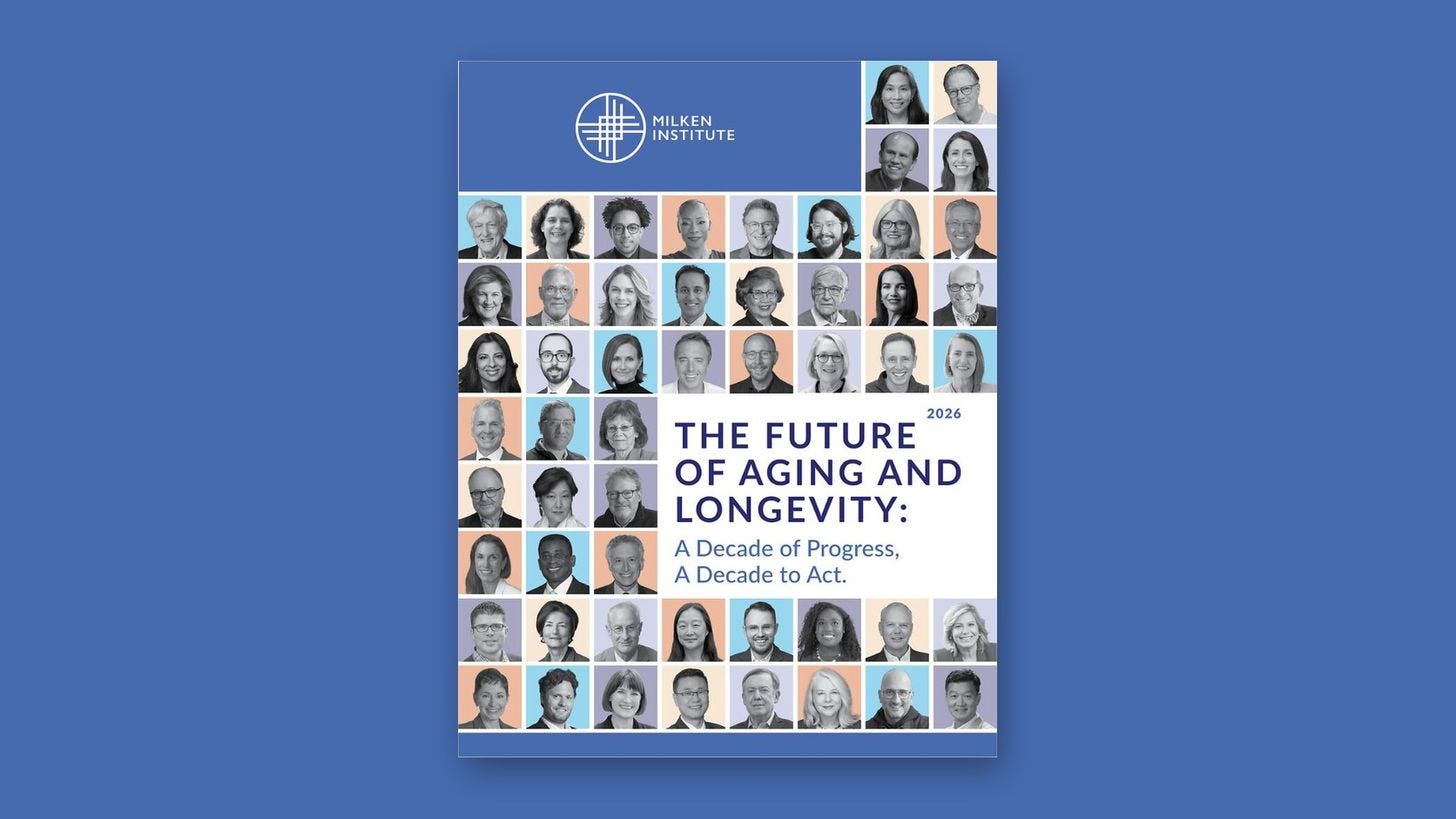
The Milken Institute renamed its Future of Aging program the Future of Aging and Longevity and released essays and interviews from more than 50 leaders, ten years after its first collection. Diane Ty, the program’s managing director, walked me through it in New York. When a policy organization of Milken’s reach puts longevity in its name, health systems, employers and investors see a mainstream agenda. The report is free to download.
VOICES
Mayo Clinic opens a research fellowship in healthy longevity and aesthetics
Dr. Saranya Wyles, who opened our Mastermind faculty in New York, directs a new 12-month postdoctoral fellowship at Mayo Clinic’s Center for Aesthetic Medicine and Surgery in Rochester. The fellow leads a study in skin rejuvenation, tissue repair or regenerative dermatology, with time in Mayo’s Healthy Longevity Clinic. PhD and MD-PhD candidates with publications are preferred. Applications close December 31.
CLINICAL PRACTICE · PRACTICE MODELS
Academic health systems adopt longevity medicine

Northwestern, Weill Cornell and Cedars-Sinai now run longevity or healthspan programs, and Mount Sinai opens its Healthspan Membership this fall. Weill Cornell charges $7,500 for a baseline assessment or $12,000 for a year. Fitness, strength and cognition sit at the core of all four, and almost all of it is paid out of pocket. None has published outcome data yet.
TECHNOLOGY · BRAIN-COMPUTER INTERFACES
Elon Musk’s Neuralink presents its first product, Telepathy

Elon Musk named Neuralink’s N1 implant system Telepathy and said its output will exceed the fastest human speech or typing within a few years. That is a forecast. In a 72-hour sprint with one participant in its VOICE study, the company built speech features for daily use, including phone calls and a mobile app, and released no performance data for them. The implant remains investigational.
THERAPEUTICS · ONCOLOGY
RNA Foundry launches personalized cancer vaccines starting at $300,000
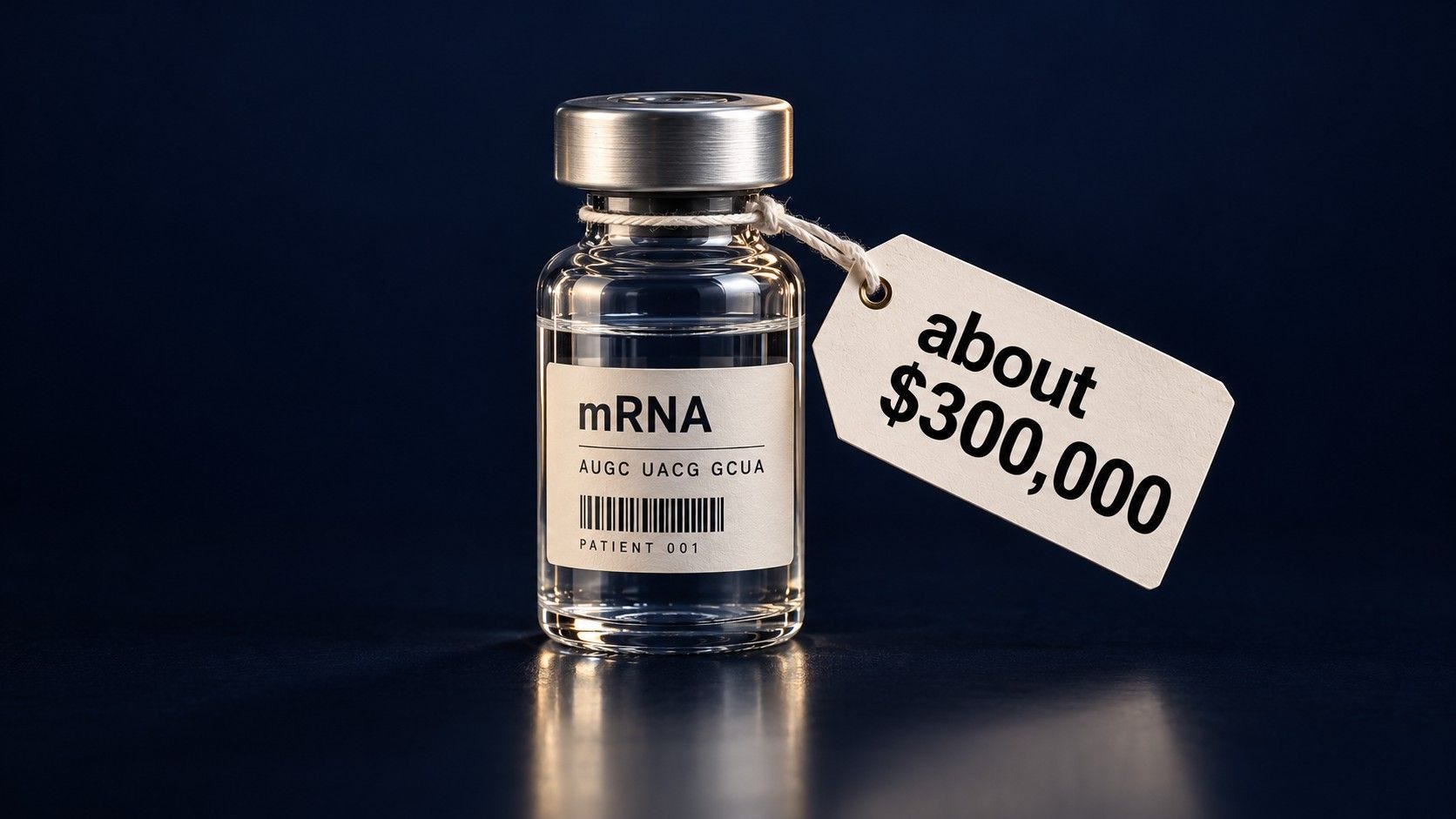
PopVax’s RNA Foundry in Hyderabad will design and manufacture personalized mRNA cancer vaccines for single patients, for about $300,000 and in 8 to 10 weeks, with capacity for 100 or more over the next year. Patients would receive them through expanded-access INDs. There are no clinical data yet for its vaccines in cancer, and sequencing, administration and combination therapy cost extra.

Every doctor is a longevity doctor
longevitydocs™ is the intelligence network for longevity medicine. 1,000+ physicians in 68 countries.
Editorial Disclaimer: