


Hey Doc,
Today is issue 100. It started the newsletter as a way for me to share the latest science, the technology, the market insights with a small group of physicians. The ecosystem got bigger as longevity became mainstream. Longevitydocs’ mission remains the same: democratize longevity medicine.
And we are getting there! Testing is cheaper. Care is more accessible. More physicians are moving into the space. More research is funded. More regulation and policy on the books. More health systems offering longevity services.
Longevity is becoming an industry beyond medicine. That is evolution, and it is also the reason the patient in front of you Monday arrives with more claims, more products, and fewer people qualified to sort them. Physicians will still play a role. Knowledge first, then care.
This is what I learned writing them (don’t expect copywriting tips)
Fringe becomes standard faster than you think. Plenty of what this newsletter covered as cutting-edge in 2024 is now used by millions of people, reimbursed, approved. Stay open.
Innovation impacts everything. Science, pricing, patient behavior, policy, regulation, and what gets taught in medical school. Keep building.
Longevity is a long-term game. Real science takes time. So does a real product. The companies that tried to skip that step are gone, and they took a lot of patient trust with them on the way out. Be patient.
Community creates impact. I do not agree with everyone in ours. That is the point. Same mission, same patients. Stay united.
It is about the patient. Every so often it is worth zooming out and asking why any of us are doing this. The answer has not changed in a hundred issues. Remember why.
The newsletter was always meant to be shared freely with our community. For 100, I am opening it up to trusted physicians from that community, in their own words, on the questions they actually get asked in clinic, the protocols they use, the work they do in the field.
Dr. Josh Starbuck goes first: peptides and the FDA.
Thank you for reading every Sunday. All hundred of them.
Dr. David Luu, Founder, longevitydocs.™
PS: I visited Milan, Shanghai and Venice. 3 things that struck me:
In Milan I stood in front of the Duomo that took six hundred years. The people who laid the first stone knew they would never see it finished. They laid it anyway.
In Venice, millions of wooden trunks driven into the mud, on the bet that wood underwater would not rot. The city is still standing on them.
In Shanghai I watched a city that went from bicycles to electric everything inside of twenty years.
Three cities. Six hundred years, a thousand years, twenty years. I have been thinking about it since.



Each week, I try to explore one idea that could advance longevity medicine and hopefully support physicians in bringing it to life. This week, Dr. Joshua Starbuck shares his perspective from the FDA's PCAC hearing on peptide compounding.
The FDA’s Pharmacy Compounding Advisory Committee recommended six peptides for inclusion on the FDA’s compounding list.
Dr. Joshua Starbuck, MD, IFMCP - Makena Health
The question at hand was never whether these compounds should be FDA approved. It was whether a licensed 503A compounding pharmacy should be legally permitted to prepare them for an individual patient holding a valid prescription from a licensed clinician.
That distinction collapses fast in translation. The 503A Bulks List is the mechanism that allows this kind of compounding, and a substance only lands on it after a full sequence: nomination, a PCAC recommendation like this one, a comment period, then formal rulemaking through the Federal Register. Even in the fastest scenario, that takes roughly 90 days from here. The last time the list actually gained anything new was 2019, six substances, five of them topical, and those six remain the only ones ever added across fourteen meetings of this committee. Fourteen meetings, six substances. That’s a fair question to sit with on its own: whether the list was ever built to move at the pace patients actually need.
Separate from the Bulks List, and important not to confuse with it, sits FDA’s category system, an interim enforcement policy built because the rulemaking path is so slow. Category 1 means FDA doesn’t currently intend to act against compounding while it works through evaluation. Category 2 means the agency identified safety concerns. Category 3 means the nomination lacked sufficient data. A substance in Category 1 is not on the Bulks List, and can sit there for years without the rulemaking that would make it official ever finishing.
Patients have been asking about these compounds for years, evidence gaps and all, because the alternative was never no access, it was unregulated access.
The votes were close, not unanimous, and each went against FDA’s own scientific staff, who had recommended against inclusion. The evaluation framework runs on four factors regardless: characterization, safety, efficacy if known but not required, and history of use.
None of this is FDA approval. The 505 pathway demands an IND, full clinical trials, and often hundreds of millions to billions of dollars before a single indication is granted. This vote doesn’t touch that pathway, and these peptides remain unapproved drugs regardless of what the rulemaking eventually does. That gap between a recommendation and an actual legal listing is where the real work now sits.
That work took shape during the public hearing, the most human part of two otherwise procedural days. Dr. Elizabeth Yurth’s testimony on BPC-157 nearly brought me to tears, she named patients describing lives improved dramatically after years searching for a provider willing to try it. Reading the public docket alongside testimony like hers made the process feel less abstract, a decision with real suffering and real relief on the other side of it.
The hearing is also where the practical path forward took shape, as speakers spent less time arguing the science and more time proposing a safer bridge while rulemaking grinds forward. Dr. Jeffrey Egler and others laid out pieces of it: a verified-sourcing registry for API suppliers, something like a greens list; expanded state-level regulatory pathways; and a structured adverse-event reporting system, the same instinct behind VAERS. None of that needs a final rule, and none builds itself either. The next challenge isn’t waiting for these six to clear rulemaking, it’s building those guardrails now, so access arrives the right way instead of just faster.
Underneath all of it, the foundation this community already knows doesn’t change. Sleep, nutrition, hydration, movement, community, stress management, and recovery carry the weight. Peptides, if they arrive on the list at all, are the icing, not the cake. Physicians carry a real responsibility to model that hierarchy rather than let it invert, appropriate use, not overuse. A reason for use rooted in the patient in front of you, informed consent that’s honest, and monitoring that catches problems early.
Get that part right, and the rest follows. When patients win, we all win.
Dr. Joshua Starbuck, MD

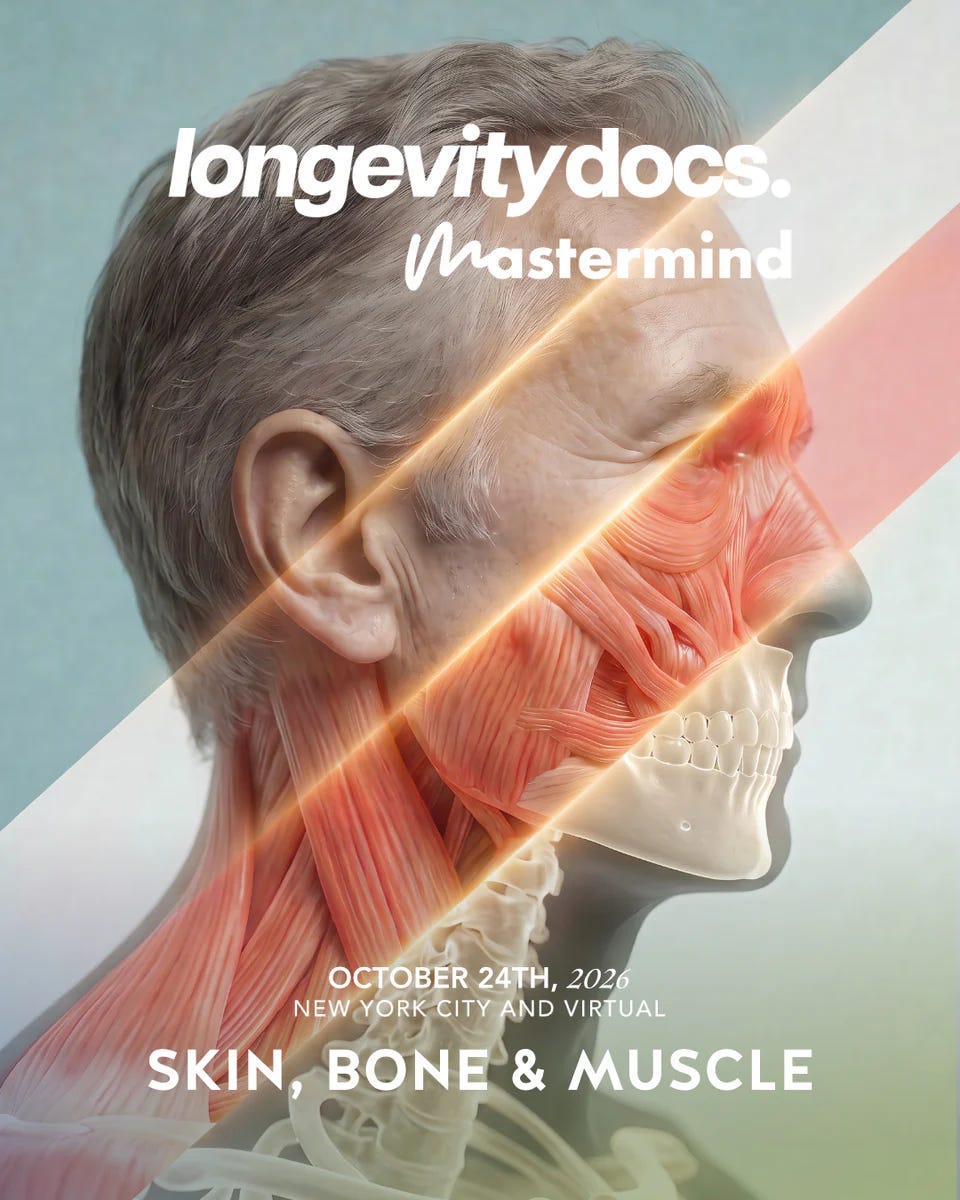
Sneak peek: the Skin, Bone and Muscle Mastermind
October 24, 2026 • New York City
Why skin, bone and muscle
It is the front door of longevity care. It is what the patient sees first, what brings them in, and what they use to judge whether any of this is working.
And it is a triad, not three separate problems. Bone and muscle fail together. Skin reports on what is happening in both. Manage them in isolation and you get exactly the results the field has been getting.
The medical community still underrates it. Cardiometabolic gets the seriousness, skin and musculoskeletal get filed under aesthetics, and the patient goes looking for answers somewhere other than a physician’s office.
That is the gap we are closing in one day.
Physician-led sessions. Every one sends you home with a protocol or a framework. Full program drops next week. Here is a sneak peek:
Skin, Bone and Muscle. The clinical triad of healthy longevity.
The Evidence. Where the science stands today, and where it is going.
New Diagnostics. The biomarkers, AI and devices you can use in practice now.
The GLP-1 Tax. Protecting skin, bone and muscle in patients already on the drug.
The Regenerative Menu. Stem cells, peptides and photons, with a risk-tiered framework for each.
Advanced Protocols. What to implement, and in whom.
The Debate. Where the money is versus where the data is. Choosing a service line you can defend in five years.
Front-row access to the physicians pioneering skin, bone and muscle longevity. One day in New York City. Breakfast, lunch and a VIP dinner. Clinical protocols and scientific breakthroughs you can put to work Monday.
For physicians only. Limited to 150.
Early access tickets are open now. Pricing goes up next week.

Navigating Risk in Telemedicine - Dr. Suneer Chander
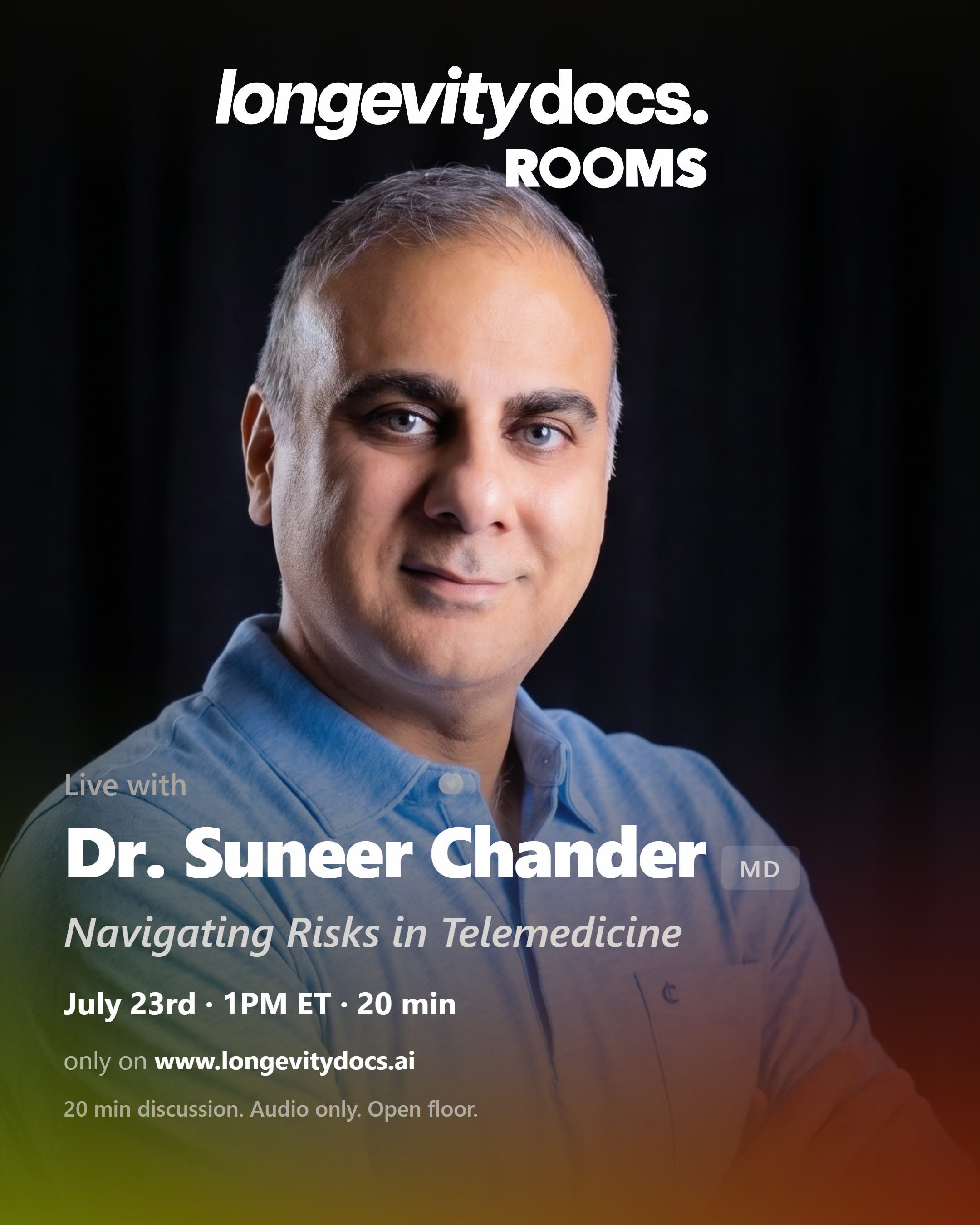
Dr. Suneer Chander, an ER physician and co-founder of Air Physician Academy, argued that malpractice fear is overblown in telemedicine and that the real exposure is regulatory. He built a four-bucket compliance framework, licensure, modality, standard of care, and treatment-specific rules, and walked through why state-by-state nuance around peptides and compounding pharmacies is shifting faster than most practices can track.
5 KEY TAKEAWAYS
Malpractice risk in telemedicine is low and priced accordingly by underwriters (roughly $5,000-$12,000/year nationally, versus ~$30,000 for emergency medicine and $40,000-$200,000 for OB-GYN), because most telemedicine is low-acuity care with no procedures attached. When claims do arise, roughly two-thirds involve misdiagnosis, making the real discipline knowing when telemedicine is the wrong tool and referring to in-person care.
Chander frames the actual risk in four buckets: licensure, modality, standard of care, and treatment-specific rules. Physicians must be licensed in the state where the patient is physically located, not where the physician sits, which is why he holds licenses in all 50 states plus DC to see patients nationally.
Modality rules vary meaningfully by state. Synchronous video, audio-only, and asynchronous store-and-forward or questionnaire-based care are each permitted differently, so a state like Texas may restrict an asynchronous chat workflow that a state like Mississippi allows, and a compliant setup in one state can be a violation in the next.
Treatment-specific rules for controlled substances, GLP-1s, TRT, and peptides are set at both the federal and state level and shift roughly every three to six months. A single compliance mistake in one state gets reported to every state medical board where a physician holds a license, forcing them to defend the same incident everywhere at once, even in states where the rule in question doesn’t exist.
Chander’s practical fix is a tracking system, as simple as a spreadsheet or a service like Mockingbird, to monitor licensure renewals and rule changes before expanding into a new state. Best read as an operational discipline rather than a one-time compliance setup: the regulatory landscape here is a moving target, not a fixed checklist.
longevitydocs. ROOMS™ are 20-minute, live-audio, unscripted peer conversations available exclusively for our members in the longevitydocs.ai platform. Sessions are designed to answer your questions in real-time.


Meet the Longevity Doctor of the Year Redefining Women’s Health
We sit down to interview Dr. Jessica Shepherd, a board-certified OB-GYN and Chief Medical Officer of Hers, named this year’s Longevity Doctor of the Year at Longevitydocs.™ Cannes 2026.
When did longevity medicine first end up on your radar?
Longevity Medicine actually was on my radar very early. I actually had an undergrad degree in exercise physiology and kinesiology, and that’s really where I saw what the body is able to do and the mechanics of the body, really looking at it from a nutritional and an exercise perspective. Going through medicine is when I started to hear women in their struggles, and I realized we were really looking at health from a disease perspective. I knew there was a way I could teach my patients to practice better, in a way they could understand their body and work from that aspect. About 7 or 8 years ago is when I saw that I needed to shift my practice and move more into education and lifestyle, and hence longevity, where we are now.
What does it mean to you to be Longevity Doctor of the Year?
I was completely shocked, in a way, because a lot of what you do, you’re just so passionate about it, and if you really love it, you just keep doing it because you love it. So to put a title to it, or an award-winner aspect to it, is really shocking, but so inspirational, because deep down you’re like, I’m doing what I’m supposed to be doing. I think a lot of times in longevity you feel it’s siloed, or you feel that you’re alone, because that’s not the structure of medicine, and that’s not how we’re trained. So to be a longevity doctor really means you have to fundamentally, wholeheartedly believe what you do.
What’s one piece of advice you’d leave a young physician watching this?
Always think big and stay curious. I never would have imagined where I started, and even when I finished training, that I would be where I am today. There’s so much that is kind of untraditional when we think of medicine, and that can be, I wrote a book on menopause, I never thought that would be something I would do, or being chief medical officer of a company who really understands that what we deliver in healthcare is not always what people need. So I would say think big, stay curious, because being curious breeds growth.
How a CLD Grad Discovered Longevity Medicine Through Her Current Patients

Dr. Angela Contreras, an anesthesiologist and interventional pain physician in Chicago and founder of Integer Health, didn’t set out to become a longevity doctor. The shift happened almost by accident, in Hawaii, right as a wave of newly separated veterans started asking her for something her training hadn’t prepared her to give.
When did longevity medicine first come on your radar?
Longevity medicine is something that I really came into touch with kind of right before I moved to Hawaii. I moved to Hawaii back in 2024 to open an interventional pain clinic for the federal government, for the VA health system. Right before that, I started noticing my interest in longevity and wanting to shift toward an approach to medicine that wasn’t as reactive, and wasn’t just treating diseases as they were surfacing for patients, but rather getting to the root of the problem. I was really fortunate to have a wonderful patient population of new veterans, individuals right out of active duty, at the pinnacle of their physiological health. They were asking me for things patients hadn’t really ever verbalized before, ways to heal their bodies in a nontraditional way, not just with interventional pain injections, but with a more holistic approach. It was the perfect timing. These patients were asking for it at the same time I was seeking something different. Longevity became something I couldn’t just ignore.
You graduated from CLD. What was one of your key takeaways from the certification?
Because the field is so novel, there’s a lot of unknowns. The certification allowed me to at least recognize what I don’t know, and gave me the framework to build some of these foundational concepts of longevity that aren’t necessarily something you can find at one conference, or in one journal, because it spans all the different specialties and then some, and it spans the basic sciences. The course allowed me to build a framework for what I need to delve into further. I would have been very lost without it. It’s navigating unknown territory.
What’s one piece of advice you’d give a physician looking to get into longevity medicine?
I would encourage them to do it. I think now is the time, the field is evolving quickly. It’s exciting, it’s novel. For a lot of physicians, this fills a void that seemed to have been there, taking the more traditional approach. So I would say just do it.
This is exactly why we are building The Certified Longevitydocs.™ (CLD) the certification and training for the longevity physician of the future. Every doctor should be a longevity doctor.

Prognostic Value of Blood-Based P-Tau217 Levels for Progression to Cognitive Impairment
In a pooled sample of multiple selected cohorts of cognitively unimpaired older adults, higher plasma p-tau217 levels were consistently associated with increased risk of clinical progression and accelerated cognitive decline. By providing time-specific absolute risk estimates, these findings support the potential of p-tau217 for prognostic model development, with direct implications for future trial design. JAMA
Metformin added to lifestyle intervention for physical function
The RCT published in Lancet suggest that in older adults with obesity undergoing intensive lifestyle intervention, metformin does not provide additional improvement in physical function. These results support prioritising lifestyle-based strategies to improve functional outcomes in this population. Lancet Healthy Longevity
Functional, molecular, and digital measurements of biological age
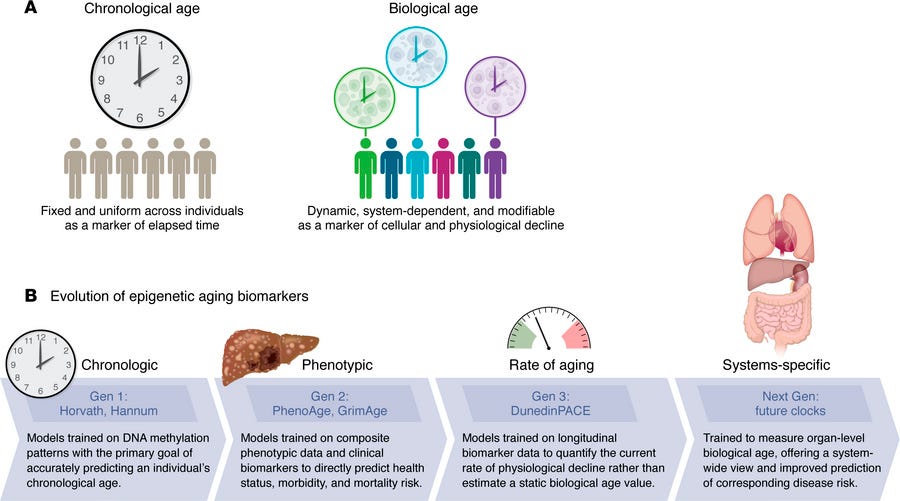
In this state-of-the-art Review, we explore historical and modern approaches to estimating biological age and highlight key conceptual, technical, and translational challenges that remain unresolved. As geroscience-guided interventions are incorporated into clinical evaluations, robust and accurate interpretable measures of biological aging are crucial to ascertain treatment effects in clinical trials. JCI

Every week, I track funding, FDA approvals, product launches, and breakthrough announcements shaping longevity medicine.
AI
OpenAI Health is Live
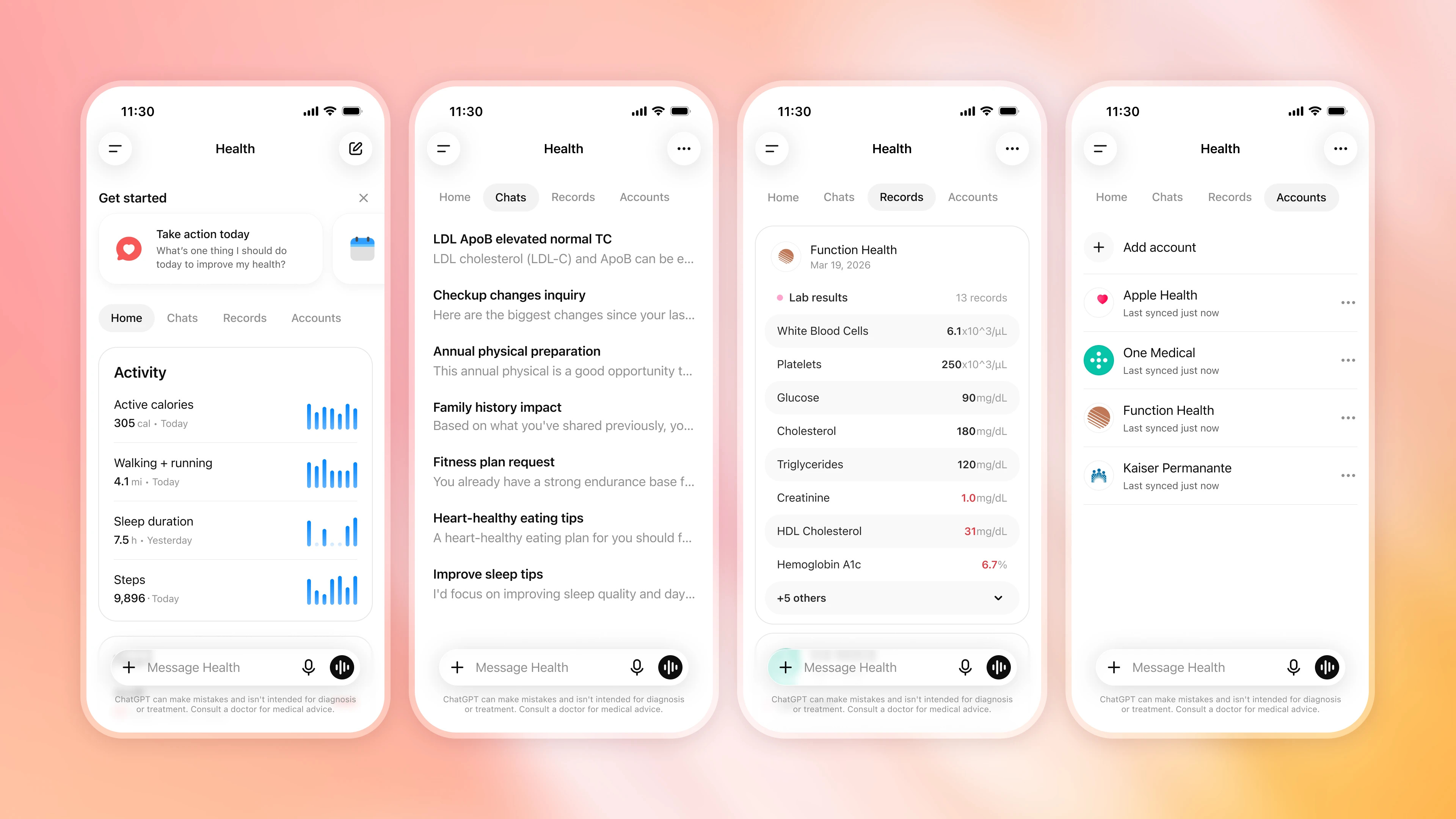
Health launched July 23 to US users 18+, all plans, web and iOS. Patients can connect Apple Health, One Medical, Function Health, and supported hospital system records. ChatGPT then reads labs, medications, conditions, visit notes, sleep, and activity, and carries that context into any conversation, not a separate health tab. OpenAI says connected records are not used for training or ads, and that permission is requested per response unless the patient switches it to always-allow.
Caristo Diagnostics' CaRi-Heart® Coronary Inflammation Technology Authorized by U.S. FDA
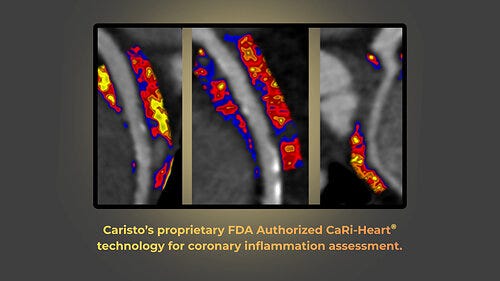
Developed from research at the University of Oxford, CaRi-Heart's flagship technology uses advanced AI to detect inflammation-related changes in the fat surrounding the coronary arteries and quantify them as a fat attenuation index score (FAI-Score™), Caristo's validated proprietary biomarker of coronary inflammation. The analysis also generates the CaRi-Heart® Risk score, a personalized estimate of a patient's risk of cardiovascular mortality over 10 years.
PHARMA
Eli Lilly Pays $2.8B for a Psychedelic-Medicine Bet

Forbes reports Eli Lilly is acquiring AtaiBeckley, the psychedelic-medicine biotech Christian Angermayer built after a personal mushroom trip convinced him FDA-approved drugs could come from psychedelics, in a $2.8 billion deal. Forbes
TECH
Why Eli Lilly is collaborating with Oura

Eli Lilly’s digital healthcare platform announced a marketing collaboration with Oura. Get a free Oura ring sizing kit. Marketing deal only, no data sharing between the two.
The partnership announcement also comes just weeks after Oura announced a new in-app tool called GLP-1 Insights, which helps GLP-1 users track their doses, side effects, and weight.
POLICY
Montana’s plan to become an experimental medical hub just pushed forward

As of this week in Montana, any biotech company with an experimental drug has a clear path to selling it to consumers. Companies whose drugs have been through preliminary testing—sometimes in as few as 10 healthy people—can pay $12,500 to apply to a newly established review board for approval. Once its treatment is rubber-stamped, the company can set the price of the drug and sell it via experimental treatment clinics, the first of which is likely to be up and running around the end of this year. MIT
CULTURE
How the Longevity Movement Is Transforming Luxury Real Estate

The findings suggest a fundamental shift in how luxury real estate is viewed. The modern trophy home isn’t necessarily the largest or most extravagant property on the block, but rather something of a tool to help owners live better, longer, and more independently for decades to come. Robb Report

The Home of Longevity Medicine
longevitydocs.™ is the largest vetted community of longevity physicians in the world, and the home of the credential that defines the field. 1,200+ doctors. 68 countries. Building the new standard of care. Every doctor should be a longevity doctor.™
Editorial Disclaimer: