


Hey Doc,
In this issue 105, the last of the series: the Longevity Patient Journey Canvas.
My prediction: more physicians will leave the corporate clinic and the health system over the next few years to own their practice. Most of them want to do medicine, not run a business. They will need to be equipped anyway, because a patient who walks into a longevity clinic is trusting a physician with the rest of their life. That is the job. Not the newest biomarker, peptide, or ring, however much we enjoy those. Patient outcomes first, and a standard of care we set ourselves before someone else sets it for us. The Canvas is a start.
The rest of the issue is a lesson in reading headlines. Semaglutide gave old mice 12% more life. Pelacarsen lowered Lp(a) and did not lower events. A biomarker moving is not a patient doing better. Longevity medicine is a complex system, and the only way to practise it is with humility, with standards, and in the service of the patient.
As always, Happy Sunday.
Dr. David Luu, Founder, longevitydocs.™

Story · Part 4 of 4
The 7-Part Canvas to Standardize Longevity Care
Three weeks ago this series started with why doctors are making the move. Then 26 physicians said what not to do. Last week, the systems. This week, the patient’s year, on one page.
The physician who leaves the health system to open a longevity practice becomes two people at once: the doctor and the operator. Ownership is the reward. It is also the problem, because there is no department to hand the year to. Every touchpoint, every price, every promise to the patient is now a decision the physician makes, or fails to make, alone.
Hospitals solved this with standards. Longevity medicine has not written its own yet, so most practices run on the founder’s memory. That holds at 40 patients and breaks at 200.
The Canvas is the standard on one page. Seven questions every patient is already asking, and for each one, a document the patient leaves with. Fill it in with what the practice actually does. The empty boxes are the work.
The 7 parts
1. Calendar When will care happen?
The rhythm of the year: baseline, results, coaching, retesting, the annual reset, and what happens in between.
The patient leaves with: a 12-month Care Calendar.
2. Team Who is looking after me?
Who owns the plan, who interprets results, who prescribes, who coaches, and who to contact first.
The patient leaves with: a Team Roster, with names.
3. Care What should I expect?
The rationale, evidence, and limits of every test and intervention, with expectations that do not promise what biology cannot deliver.
The patient leaves with: a Care Guide.
4. Outcomes How will we see progress?
The few measures that matter, baseline to trend, including the one the patient chose.
The patient leaves with: an Outcomes Scorecard.
5. Experience How does this work in practice?
How blood draws, imaging, the app, and messaging fit a life with travel and a job, and what the practice does when something goes wrong.
The patient leaves with: an Experience Guide.
6. Pricing What will I invest, and where does the practice earn money?
The fee, the inclusions, the likely extras, and where the practice earns revenue, including on supplements, testing, and referrals.
The patient leaves with: a Pricing and Financial Disclosure.
7. Trust What commitments can I hold the practice to?
How the practice handles evidence, uncertainty, consent, privacy, safety escalation, and conflicts of interest, in writing.
The patient leaves with: Our Commitment to You.
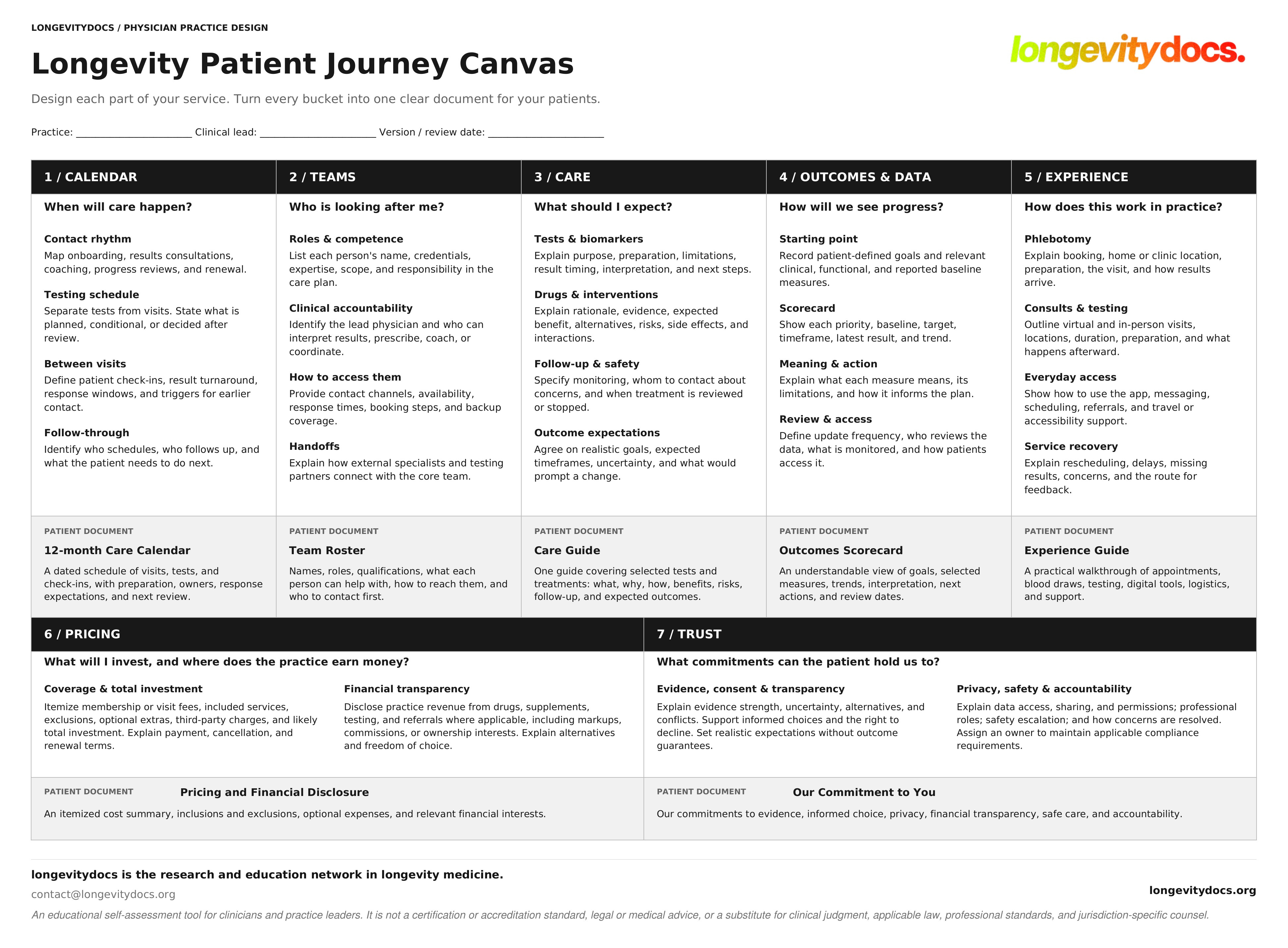
Download it, fill it in, share it with your team.

Missed last week? The Longevity Clinic Readiness Checklist is on the website.

Semaglutide, started late, extended life in mice
Chen et al. · Nature · Sep 2, 2026
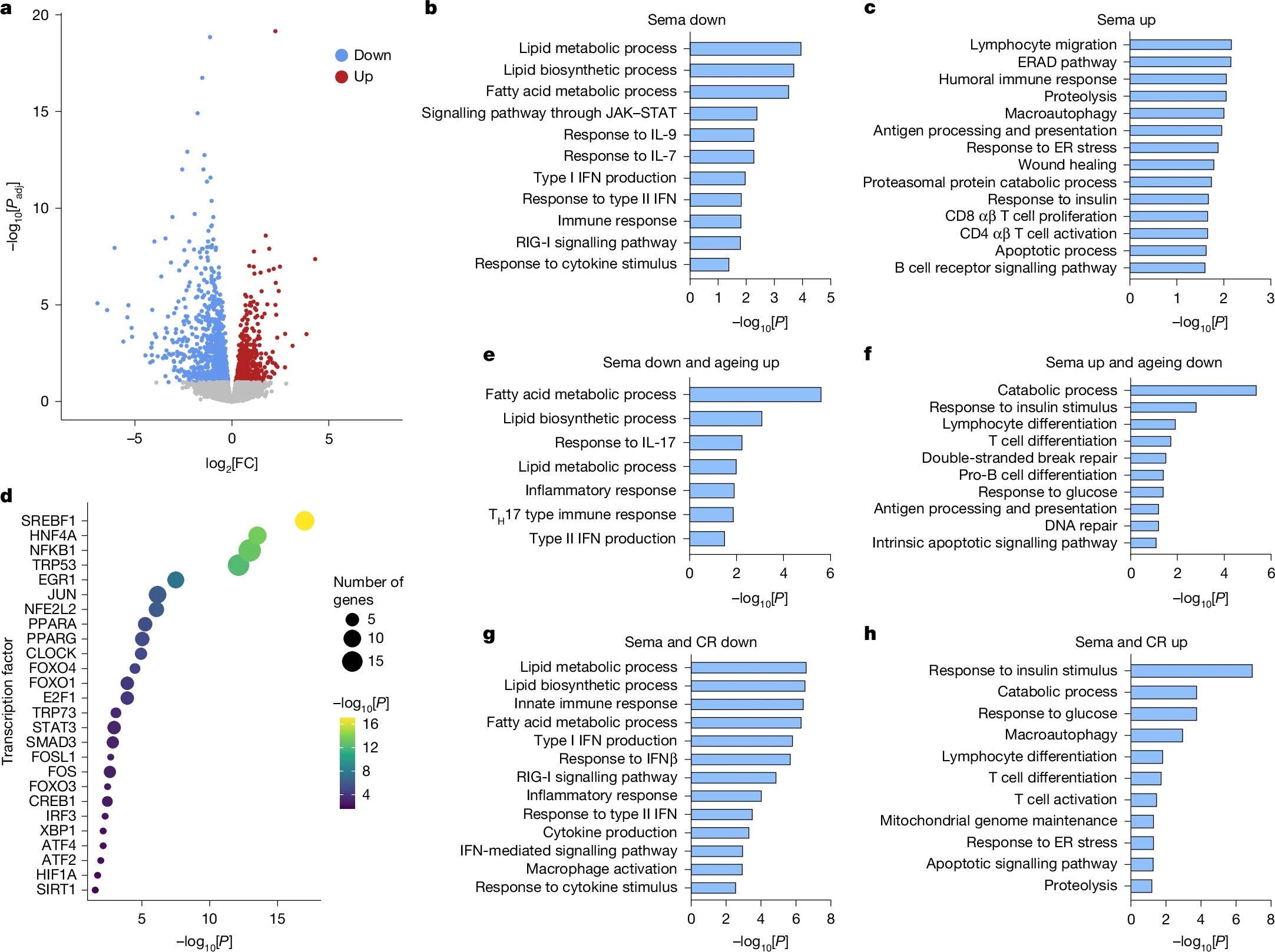
Female mice started daily semaglutide at 20 months, roughly a human mid-60s, and stayed on it for life. Median lifespan rose from 742 to 834 days, about 12%. A shorter course improved movement, muscle function, glucose tolerance, and hippocampal neurogenesis, and the gene-expression profile looked like calorie restriction. Head to head against 24% calorie restriction, semaglutide matched most of the benefit and did better on memory and glucose, without the hunger.
For longevitydocs: the Monday question is "is Ozempic a longevity drug," and this is the best citation yet for "in mice, started late, probably." Female mice only, no human aging endpoint, and Evoke already showed the biomarkers can move while the patient does not. A real signal, and a reason to keep the human outcome study in view before the word longevity goes on the prescription.
Evidence: Company-reported Phase III topline result; full data pending
Aging-related disease is now the largest burden a newborn will face
Ashwin, Bloom, Scott et al. · Nature Aging · September 2, 2026
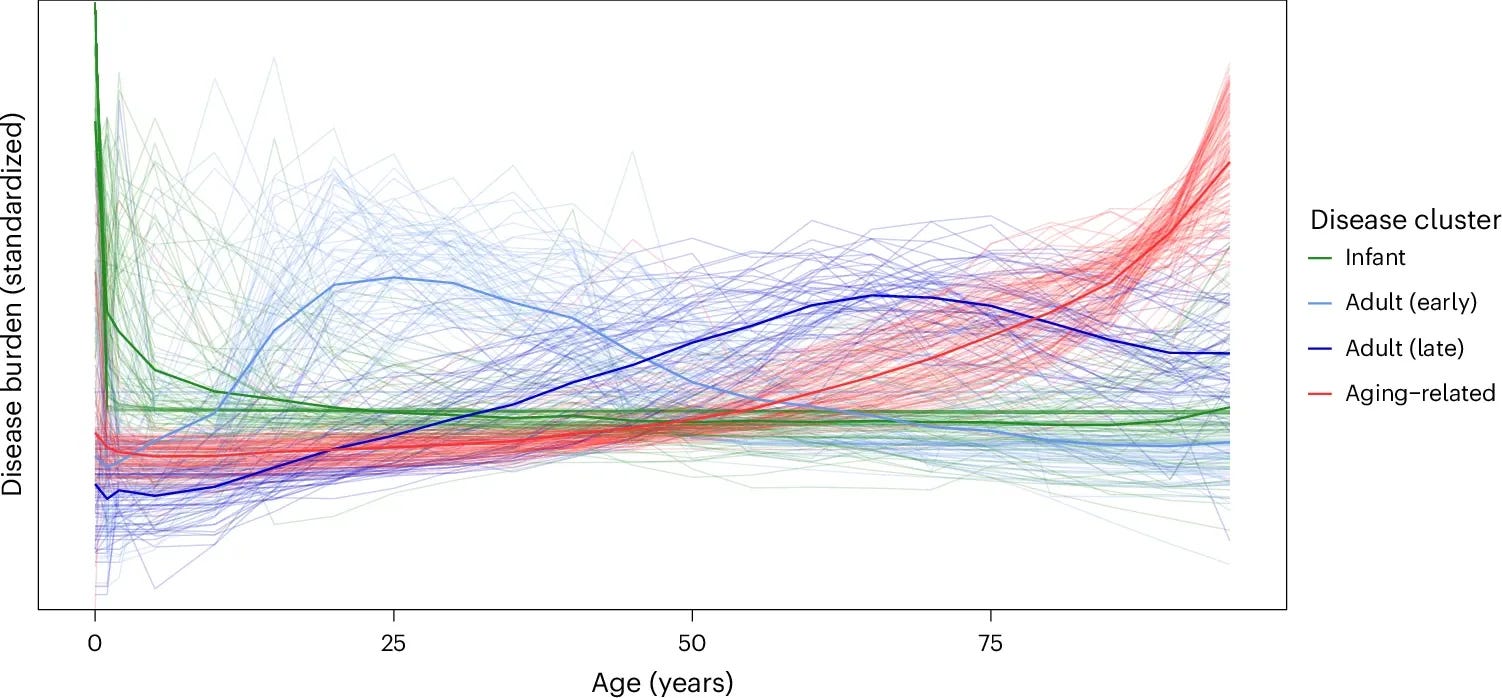
Using Global Burden of Disease data, the authors sort every disease into four life-stage clusters: infant, early adult, later adult, and ageing-related. Ageing-related disease is already the largest burden worldwide and the largest expected lifetime burden for a newborn in every income group. It is also the only cluster with increasing returns: each gain in mortality makes the next gain in morbidity worth more, and the reverse.
For longevitydocs: this is the answer to why longevity medicine is needed. The paper is the evidence that aging-related disease is the largest burden for individuals, nations, health systems, payers, and employers.
Evidence: Preclinical / female mice

Lexicon
TMAO
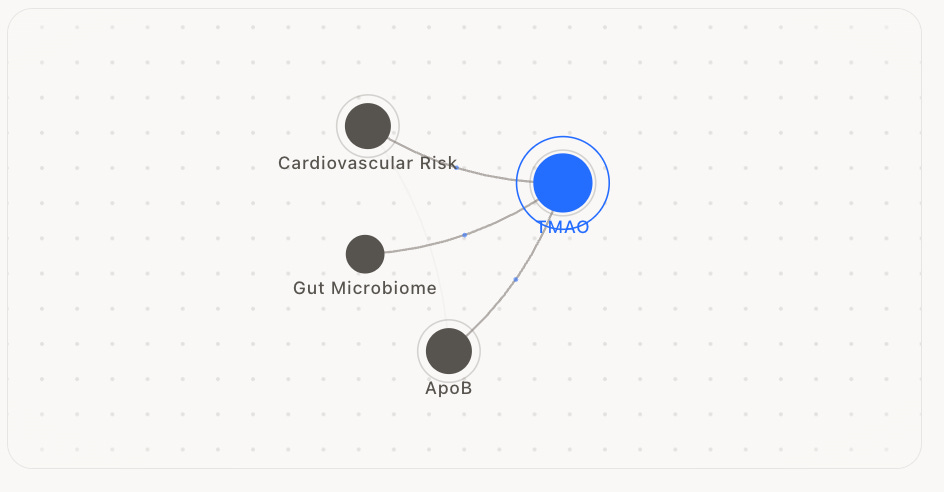
Trimethylamine N-oxide (TMAO) is the main diet-induced metabolite produced by the gut microbiota and is mainly eliminated through renal excretion. It is a low-molecular-weight amine oxide, formed by oxidation of trimethylamine (TMA) by hepatic flavin-containing monooxygenases. TMAO has been widely tested as a prognostic marker across patient populations, and the studies so far support its use as a prognostic marker in cardiovascular disease.
How it is made, how it is thought to drive atherosclerosis and thrombosis, and what it does in chronic kidney disease, with the six references, in the full entry.
Certification
Biomarker Interpretation Learning Checklist, by Hippo
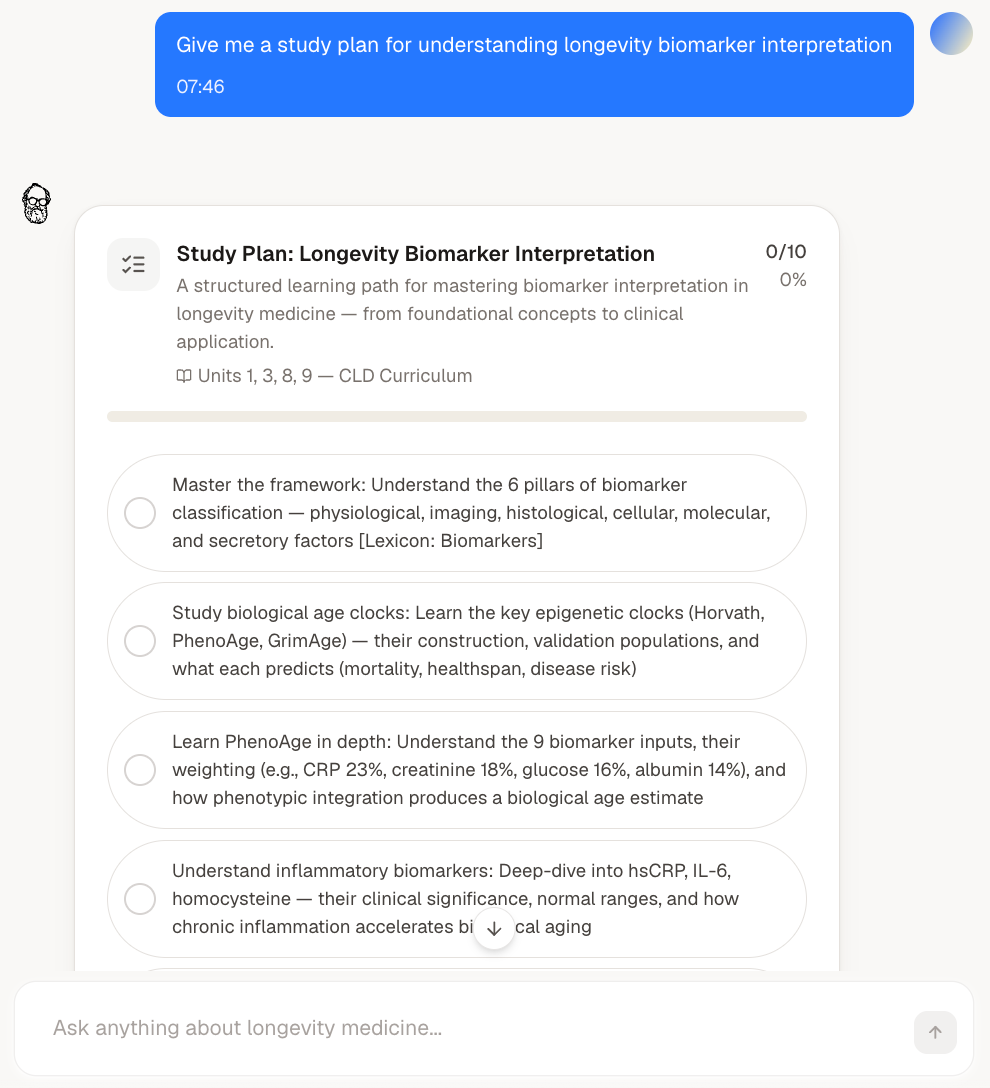
Hippo, the physician AI inside longevitydocs, now builds your learning checklist from the CLD biomarker module: the markers to be able to read, what each one does and does not tell you, and where the reference range is not the target. Tick what you already know. Hippo tracks the rest and points you to the session that covers it.
Explore the CLD program

Buzz in the chat
What cash-pay clinics are doing about compounded GLP-1s
One member raised the question of what cash-pay practices are doing about tirzepatide and semaglutide compounding given the FDA crackdown.
Branded manufacturer programs (Lilly Direct, Novo Direct) are viable alternatives to compounding but become expensive at higher doses; compounded tirzepatide can still be cost-competitive for many patients.
Oral semaglutide produces weaker weight loss than injectable, requires daily dosing, and still causes nausea; it has utility for blood sugar regulation and some inflammatory and anxiety benefits.
The Lilly Direct Qwikpen has a one-year beyond-use date, allowing patients to stock up; ordering must occur at least every 45 days to maintain discounted pricing.
Expanded access to branded Retatrutide at no cost to patients is available through Eli Lilly for qualifying patients, though it involves significant paperwork.
Compounders have adjusted pricing upward to compensate for branded competition, reducing the cost gap at higher doses.
Evidence: Member discussion; not clinical or regulatory guidance
Non-member physician → Explore memberships
Member profile
Ken Winnard, MD, CLD

Ken graduated from the CLD this year and did not wait. OneLife Health & Performance is now open: 6,500 square feet in Palm Beach Gardens with diagnostics, recovery, and performance in one building, and an internist at the head of it. Most physicians in the network talk about building this. Ken did it.

In the app
Daily Digest is live
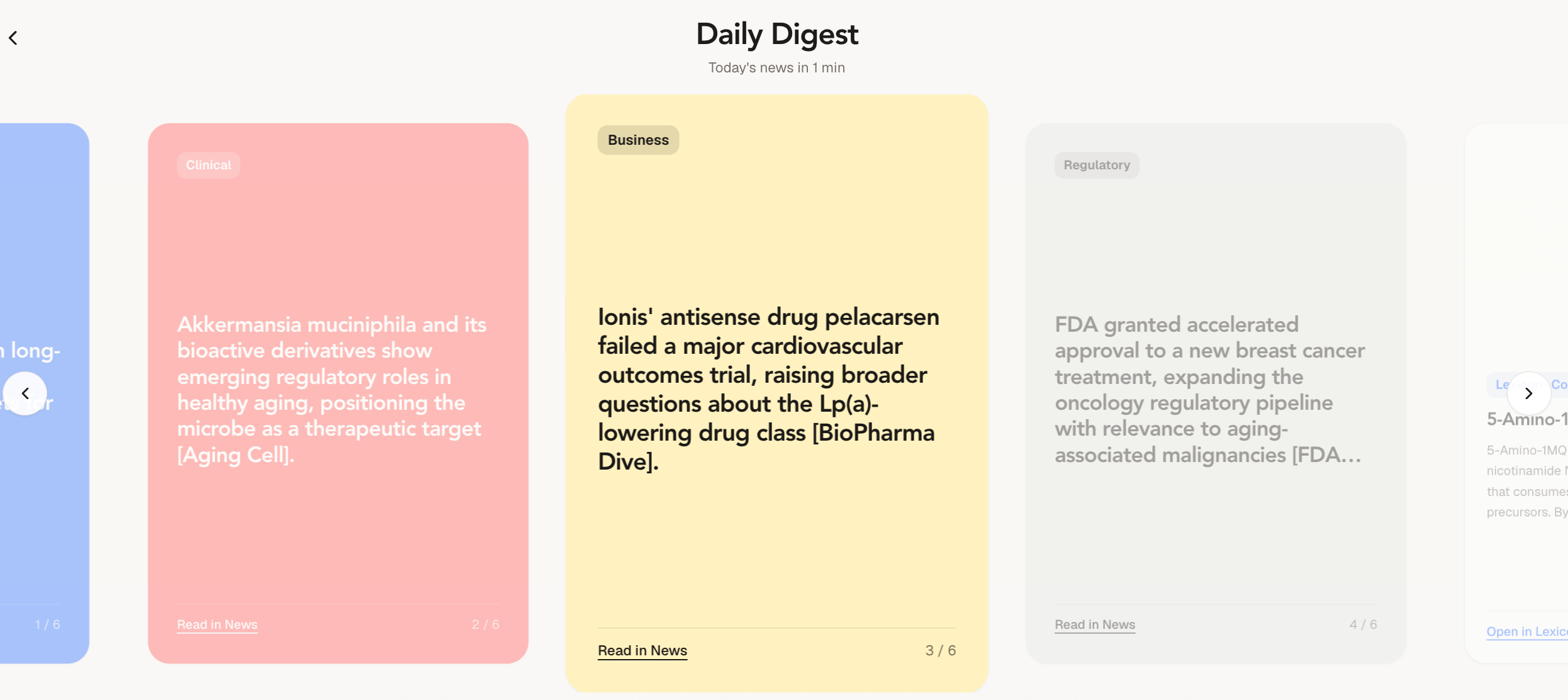
Six cards, one minute, every morning. Four news items from the last 24 hours, tagged clinical, business, or regulatory. One Lexicon concept. And one card of emerging topics: what is accelerating across the network’s reading over seven days, and what is fading. This week wearable diagnostics and growth hormone are new, GLP-1 longevity is up a third, immune aging is down a third.
Apply for membership (physicians only)
Calendar
Upcoming Events

September 9 · Rooms · Dr. Elizabeth Poynor · Women's Longevity Protocols · 12pm ET · 30 min, audio, open floor
September 22 · Table · New York City · Dinner, limited to 20 physicians
October 24 · Mastermind · Skin, Bone & Muscle · New York City and virtual
June 9-11, 2027 · Summit · Cannes

AI
ChatGPT is now reading your Epic chart

ChatGPT for Healthcare integrates with Epic. Authorized physicians can pull labs, medications, notes, and specialist documentation into ChatGPT, or use it embedded in Epic, with UCSF Health as the named pilot. Read-only, physician-rated 99.1% safe across thousands of evaluations, and linked to PubMed, ClinicalTrials.gov, and CMS Coverage.
For longevitydocs: AI is arriving in the chart from every direction, and read-only is the sensible first step. The part it cannot do yet is what longevity doctors do every day: weigh a thin evidence base against the one patient in front of you. That job just became more visible, not less.
Pharma
The Lp(a) drug moved the number, not the outcome
Novartis and Ionis reported topline Phase III results from Lp(a)HORIZON on September 4: 8,323 patients with elevated Lp(a) and established cardiovascular disease on guideline-directed therapy. Pelacarsen lowered Lp(a) as expected. It did not reduce the composite of CV death, MI, stroke, or urgent revascularization versus placebo, in either the 70 mg/dL or the 90 mg/dL population.
For longevitydocs: one trial, one population, one dose. The Lp(a) hypothesis is still alive, and the deeper-lowering programs will tell us more. For now, measuring Lp(a) still changes how you counsel residual risk, and that was always the reason to measure it.
Tirzepatide earns its first outcomes label
FDA approved tirzepatide to reduce MACE in adults with type 2 diabetes at cardiovascular risk. The claim rests on SURPASS-CVOT against dulaglutide, an active comparator, with an 8% relative reduction. First label expansion for Mounjaro.
For longevitydocs: good news for a large group of patients, and the first incretin label written on hard cardiovascular outcomes. The non-diabetic trials are the ones to watch next; if they land, the conversation in longevity clinics changes.
Wearables
Oura is going public with 3.6 million people's worth of data

Oura filed for a US listing with roughly $1.21B in revenue over nine months and more than 3.6M rings sold in the past year. The pitch to investors is the pitch to patients: continuous sleep, recovery, cycle data, and now lab panels through the app.
For longevitydocs: that is 3.6 million people already collecting what you would have asked for at intake. Physicians who bring it into the visit are finding it a useful starting point, especially on sleep.
A hormone panel from behind the ear, n=12

Phira unveiled a behind-ear wearable that models estrogen, LH, and progesterone dynamics from skin temperature at 0.03°C resolution, not from blood or urine. The pilot: 12 women, 31 cycles, compared with daily urine. A larger study including PCOS and perimenopause is underway, launch targeted for 2027.
For longevitydocs: a temperature model that tracks cycle pattern is a real step, and the perimenopause data will be interesting. Twelve women for now, so it sits alongside the lab, not in place of it.
Evidence: Pilot validation study; n=12

Every doctor should be a longevity doctor
longevitydocs.™ is the research and education network for longevity medicine. 1,000+ physicians, 68 countries
Forward this to a colleague. Questions and corrections: reply to this email.
Editorial Disclaimer: